
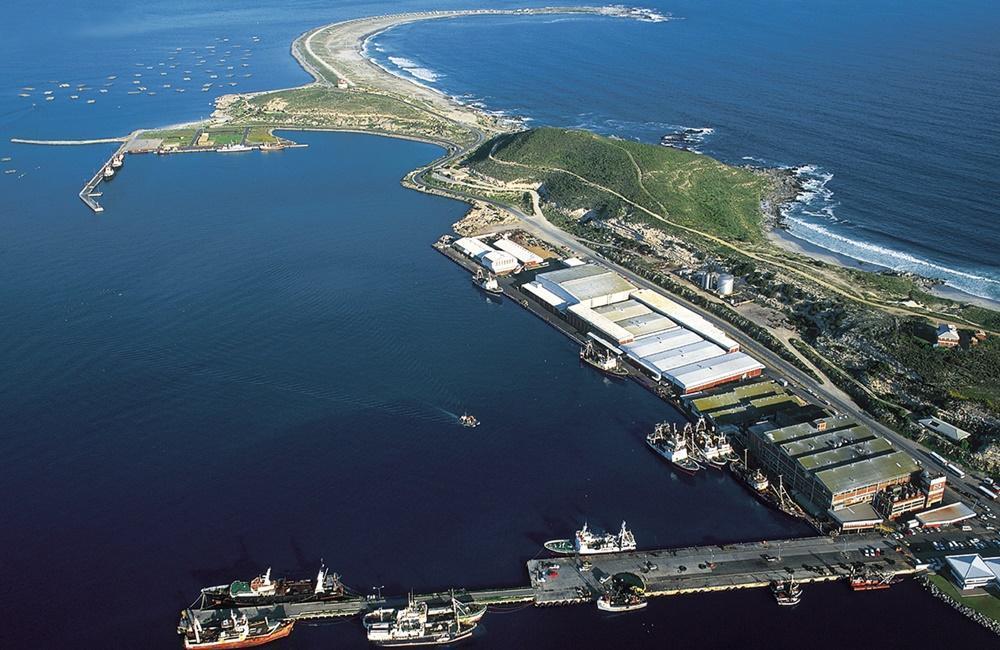
South Africa’s Special Economic Zones (SEZs) are becoming increasingly important nodes in the country’s industrial, manufacturing and logistics network.
Designed to attract domestic and foreign investment, the zones combine purpose-built infrastructure with sector-specific industrial clusters, tax incentives and government investment facilitation.
Many are deliberately positioned near major ports, airports, highways and international trade corridors, giving manufacturers and logistics companies access to both South Africa and wider African markets.
South Africa’s current SEZ network spans industries ranging from automotive manufacturing and agro-processing to maritime services, mining beneficiation, renewable energy, pharmaceuticals, electronics and logistics.
InvestSA describes the zones as designated areas designed to accelerate industrialisation, attract investment and create employment.
For companies considering manufacturing or distribution in Southern Africa, the location of an SEZ can therefore be just as important as its tax and investment incentives.
What are Special Economic Zones in South Africa?
Special Economic Zones are geographically designated areas established for targeted economic activities and supported by special arrangements intended to encourage industrial development.
South Africa’s SEZ programme is designed around sector-focused industrialisation.
Rather than treating every zone as a general-purpose industrial park, individual SEZs are developed around specific economic strengths, including automotive manufacturing, minerals beneficiation, agriculture, logistics, maritime industries and green technology.
The logistics advantage is particularly important.
Coega, Richards Bay and Saldanha Bay are connected to major ports, while Dube TradePort and OR Tambo SEZ are built around airfreight connectivity.
Other zones are positioned along major road and trade corridors, including the N3 between Johannesburg and Durban, the N1 toward Zimbabwe and the Maputo Development Corridor.
Related Articles
Africa’s Container Shipping Outlook: Why Freight Capacity Could Stay Tight Through 2026
Five Logistics Challenges Still Limiting Kenyan Exports Under AfCFTA
How Lekki Deep Sea Port Has Changed Nigeria’s Maritime Industry Since Opening
South Africa’s Major Special Economic Zones
1. Coega SEZ — Eastern Cape
Coega is South Africa’s largest SEZ, covering approximately 9,003 hectares across 14 zones. It is located in Nelson Mandela Bay and sits adjacent to the deep-water Port of Ngqura.
The zone has a broad industrial base covering automotive manufacturing, metals and metallurgical industries, agro-processing, aquaculture, chemicals, energy, maritime activities, logistics and business process outsourcing.
Its location gives manufacturers direct access to a major export gateway. For companies producing goods for international markets, the combination of industrial land, port access and established supply chains makes Coega one of the country’s most strategically important SEZs.
Its automotive, metals, energy and logistics clusters also create opportunities for suppliers and service providers seeking to locate close to larger industrial customers.
2. Saldanha Bay IDZ — Western Cape
Saldanha Bay is particularly important for companies involved in maritime industries and offshore services.
InvestSA identifies it as South Africa’s only sector-specific SEZ and the only SEZ located within a port. Its activities include oil and gas, marine repair, maritime fabrication, engineering and logistics services.
The zone operates as a Customs Controlled Area within the Saldanha Bay port environment.
This makes it particularly relevant to companies involved in marine equipment, offshore support, vessel repair and other port-related industrial activities.
For logistics operators, the key advantage is the direct connection between industrial activity and maritime infrastructure.
3. East London IDZ — Eastern Cape
The East London Industrial Development Zone (ELIDZ) is one of South Africa’s established industrial zones and has developed a strong manufacturing base.
Its current focus includes automotive components, agro-processing and aquaculture, advanced manufacturing, sustainable energy and green technology, digital economy and ICT, and business process outsourcing.
The zone also has a Science and Technology Park supporting innovation, incubation and small-business development.
Its position in the Eastern Cape makes it an important part of South Africa’s automotive and manufacturing ecosystem, while its connection to the Port of East London supports companies moving manufactured goods and industrial inputs through maritime supply chains.
4. Maluti-a-Phofung SEZ — Free State
The Maluti-a-Phofung SEZ, or MAPSEZ, has one of the clearest logistics orientations in South Africa.
The zone is positioned on the N3 corridor between Johannesburg and Durban, one of the country’s major freight routes.
InvestSA describes it as a multi-sector SEZ focused on light and heavy manufacturing, logistics and warehousing.
Its activities include cross-docking, vehicle distribution, automotive supply, agro-processing and chemical blending.
For logistics companies, the location is significant because the zone sits between South Africa’s economic hub in Gauteng and the Port of Durban. That creates opportunities for warehousing, distribution, freight consolidation and transport-related businesses.
5. Dube TradePort SEZ — KwaZulu-Natal
Dube TradePort is located next to King Shaka International Airport and is designed around commercial, industrial and logistics activities requiring strong air connectivity.
Its sectors include aerospace and aviation-linked manufacturing, electronics, medical devices, pharmaceuticals, textiles, automotive components and logistics. The Dube AgriZone focuses on perishables, horticulture, aquaculture and floriculture.
This makes Dube particularly relevant to businesses moving high-value or time-sensitive products.
The combination of airport access, logistics infrastructure and agricultural production also gives the zone an important role in South Africa’s perishables supply chain.
6. Richards Bay IDZ — KwaZulu-Natal
Richards Bay IDZ is linked directly to the deep-water Port of Richards Bay and has access to road and rail infrastructure along the N2 corridor.
Its industrial focus includes metals beneficiation, aluminium, iron ore and titanium, renewable energy, agro-processing, marine industries and ICT.
InvestSA also positions the zone as a potential major energy hub, including LNG and green-energy projects.
The combination of port infrastructure and heavy industry makes Richards Bay particularly suited to businesses handling bulk commodities, industrial materials and energy-related equipment.
For logistics operators, the zone represents a gateway between industrial production and one of South Africa’s major bulk-handling ports.
7. Atlantis SEZ — Western Cape
Atlantis SEZ has a different proposition from many of South Africa’s other zones.
Located about 40 kilometres from Cape Town, it focuses specifically on green technology manufacturing and related services.
Its sectors include renewable-energy equipment, energy storage, electric mobility, recycling, waste management, advanced materials, packaging and green building materials.
The zone’s specialisation reflects the growing importance of clean-energy supply chains.
For manufacturers of renewable-energy components, batteries, electric-mobility equipment and related technologies, an industrial cluster dedicated to these activities can provide access to suppliers, infrastructure and a growing market.
8. OR Tambo SEZ — Gauteng
The OR Tambo SEZ is built around one of Africa’s most important aviation gateways.
Located at OR Tambo International Airport, it focuses on high-value, low-mass products that are particularly suited to airfreight.
Its sectors include jewellery and diamond beneficiation, precious metals, pharmaceuticals, medical devices, electronics and agro-processing.
The Springs Precinct also targets logistics and supply-chain operations.
This makes OR Tambo different from port-oriented zones such as Coega and Richards Bay. Its competitive advantage is speed: companies dealing with valuable or time-sensitive products can use air connectivity rather than relying primarily on road or maritime transport.
9. Tshwane Automotive SEZ — Gauteng
The Tshwane Automotive SEZ (TASEZ) is focused specifically on the automotive industry and has been developed as a purpose-built automotive manufacturing hub.
Its activities include original equipment manufacturer supply chains, automotive components and assembly, and new-energy vehicle production.
The zone’s importance extends beyond vehicle assembly. Automotive manufacturing depends on a complex network of component suppliers, logistics providers and specialised industrial services.
By concentrating these businesses in an automotive cluster, TASEZ is designed to increase local production and strengthen South Africa’s position in global automotive supply chains.
10. Platinum Valley SEZ — North West
Platinum Valley SEZ, also known as the Bojanala SEZ, is located in South Africa’s platinum belt.
Its industrial focus is centred on platinum-group-metal beneficiation, fuel-cell development, hydrogen technology, platinum recycling, autocatalysts, mining capital equipment, renewable energy and agro-processing.
The zone illustrates another important role of SEZs: moving beyond the export of raw minerals toward higher-value processing and manufacturing.
Mining-equipment manufacturers and suppliers may also find opportunities within this ecosystem, particularly as South Africa seeks greater local beneficiation and industrial participation in mining value chains.
11. Musina-Makhado SEZ — Limpopo
Musina-Makhado SEZ is strategically positioned on the N1 corridor toward Zimbabwe and the wider Southern African Development Community (SADC) market.
The zone has two sites. The Musina North Site focuses on light manufacturing, agro-processing, cold storage and logistics, while the Makhado South Site is intended for metallurgical and mineral beneficiation.
Its proximity to the Beitbridge border makes the logistics proposition particularly significant.
However, investors should note that InvestSA currently describes the zone as being at the development stage and undergoing a turnaround plan. Companies considering the zone should therefore verify the latest development and infrastructure status before making investment decisions.
12. Nkomazi SEZ — Mpumalanga
Nkomazi SEZ is located at Komatipoort along the Maputo Development Corridor, linking South Africa with Mozambique and other regional markets.
The zone focuses on agro-processing, particularly citrus, subtropical fruits and aromatic plants, as well as nutraceuticals, logistics, freight and alternative energy. Its location provides access to the Port of Maputo.
For logistics and agricultural companies, this creates an interesting cross-border proposition: production and processing can be located near agricultural resources while exports can move toward Mozambique and the port system serving international markets.
13. Fetakgomo-Tubatse SEZ — Limpopo
The Fetakgomo-Tubatse SEZ is located in the Steelpoort area of Limpopo’s Sekhukhune District.
Its focus includes platinum-group metals, chrome and vanadium beneficiation, green-energy manufacturing, hydrogen production, agro-processing, mining-input manufacturing and automotive supply.
The zone forms part of the wider mineral and industrial ecosystem in the Limpopo Platinum and Chrome Cluster.
Its development highlights the growing connection between South Africa’s SEZ strategy, mineral beneficiation and the emerging hydrogen economy.
What incentives do South African SEZs offer?
SEZs are intended to lower the cost and complexity of establishing industrial operations.
InvestSA currently identifies a 15% preferential corporate income tax rate for qualifying businesses operating within an SEZ, compared with the standard 27% rate.
Businesses may also qualify for building and infrastructure allowances and the Employment Tax Incentive.
Businesses operating within Customs Controlled Areas can also benefit from customs-related arrangements, including duty-free importation of qualifying production-related raw materials, machinery and assets, as well as VAT exemptions on qualifying supplies.
However, these benefits are subject to specific eligibility requirements. Investors should confirm the applicable conditions with the relevant SEZ and the Department of Trade, Industry and Competition before making investment decisions.
Why SEZs matter to logistics companies
The biggest opportunity may not be the tax incentive itself. It is location.
South Africa’s SEZ network connects industrial activity to the country’s major freight gateways.
Coega connects manufacturing with the Port of Ngqura. Richards Bay connects heavy industry with a major deep-water port. Saldanha Bay integrates maritime industrial services directly into a port environment.
Dube TradePort and OR Tambo provide airport-linked logistics options, while MAPSEZ sits along the N3 freight corridor between Johannesburg and Durban.
Further north, Musina-Makhado provides a potential gateway toward Zimbabwe and SADC markets, while Nkomazi connects industrial and agricultural activity to the Maputo Development Corridor and Port of Maputo.
This geographic diversity means companies can select an SEZ according to their supply-chain requirements rather than simply choosing the zone offering the largest industrial site.
South Africa’s SEZ outlook
The next phase of South Africa’s SEZ development is likely to be shaped by several major industrial trends: localisation, renewable energy, electric mobility, mineral beneficiation, agro-processing, logistics and regional trade.
The country’s 2026 investment strategy is also increasingly focused on decarbonisation, digitisation and diversification, reinforcing the relevance of green manufacturing, advanced industrial production and technology-oriented investment.
For logistics companies, this could translate into new demand for warehousing, freight forwarding, industrial transport, cold-chain services, customs handling and specialised supply-chain infrastructure.
The SEZ network is therefore becoming more than a collection of industrial parks. It is evolving into a system of specialised production and logistics nodes connecting South Africa’s natural resources, manufacturers, ports, airports and regional markets.
South Africa’s Special Economic Zones offer investors a combination of industrial infrastructure, sector specialisation, government facilitation and access to major transport networks.
The most attractive zone will depend on the business.
A manufacturer targeting export markets may look toward Coega. A maritime company may find Saldanha Bay more suitable.
An automotive supplier may consider TASEZ or ELIDZ, while a logistics operator could look closely at MAPSEZ, Dube TradePort or OR Tambo.
For businesses targeting Southern African markets, meanwhile, Nkomazi and Musina-Makhado offer strategically important corridor locations.
The real strength of South Africa’s SEZ programme is therefore not simply the number of zones. It is the combination of industry, infrastructure and geography—bringing production closer to ports, airports, freight corridors and regional markets.
As South Africa seeks to deepen manufacturing, increase local value addition and attract new investment, these zones will remain important pieces of the country’s industrial and logistics strategy.
Source: InvestSA, South Africa’s official investment promotion agency and a division of the Department of Trade, Industry and Competition.
Also Read
- How Ghana’s Tema Integrated Industrial Park Could Reshape West African Trade
- Five Logistics Challenges Still Limiting Kenyan Exports Under AfCFTA
- Top 50 Logistics Companies in South Africa (2026 Guide)
- The AI skills gap could become logistics’ biggest supply chain challenge

- Air freight costs climb as capacity constraints reshape global trade routes - October 22, 2026
- Beyond the Truck: How UD Trucks Is Redefining Fleet Performance in Southern Africa - October 12, 2026
- Maersk and Viaservice Target Working Capital Challenge in Kenya’s Container Logistics Sector - August 20, 2026

