
The African Continental Free Trade Area (AfCFTA) is widely regarded as one of the continent’s most ambitious economic integration initiatives, creating access to a market of more than 1.4 billion people.
For Kenyan manufacturers, the agreement offers new opportunities to expand beyond traditional export destinations and tap into fast-growing markets across Africa.
However, while tariffs are gradually being reduced, the real barriers to trade are increasingly found elsewhere.
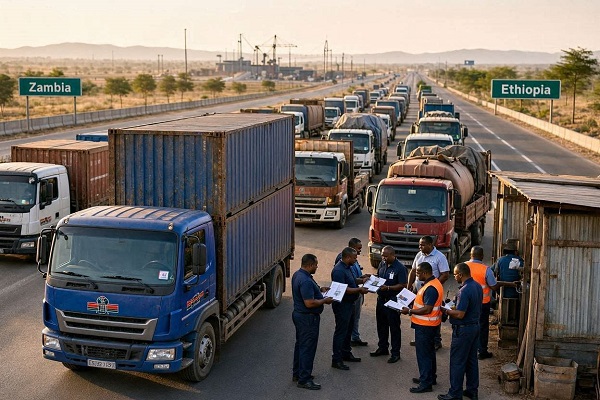
High transport costs, border delays, fragmented logistics systems, and expensive compliance procedures continue to undermine the competitiveness of Kenyan exporters, particularly small and medium-sized enterprises (SMEs).
A logistics study commissioned by the Kenya Association of Manufacturers (KAM) found that inefficient supply chains remain one of the biggest obstacles preventing businesses from fully benefiting from AfCFTA.
The study concludes that reducing logistics costs could have a greater impact on export competitiveness than tariff reductions alone.
1. Transport Costs Remain the Biggest Burden
Moving goods across Africa remains expensive, and road freight continues to account for the largest share of logistics expenses for Kenyan exporters.
The KAM study estimates that transporting a 20-foot container from Nairobi to Lusaka costs between US$3,500 and US$7,000, depending on fuel prices, truck availability, and market conditions.
Besides freight charges, exporters must also absorb toll fees, carbon levies, driver allowances, and other corridor-related expenses.
According to the report, inland transport alone can account for more than 70 percent of total logistics costs on the Lusaka corridor, leaving exporters highly exposed to fuel price fluctuations and freight market volatility.
For SMEs shipping relatively small volumes, these costs significantly increase the landed price of their products.
2. Border Delays Continue to Disrupt Supply Chains
Infrastructure investments have improved several regional transport corridors, but border operations continue to slow the movement of goods.
At the Nakonde-Tunduma border between Tanzania and Zambia, approximately 30,000 customs declarations are processed every month.
Despite the high throughput, average clearance time remains about 2.5 days, with delays linked to scanner downtime, ICT connectivity issues, documentation verification, and congestion.
Transit times along the Nairobi-Lusaka route can vary dramatically—from 8 days to as long as 30 days—making delivery schedules difficult to predict.
For manufacturers operating on tight production schedules or serving time-sensitive markets, this unpredictability increases inventory costs, ties up working capital, and raises the risk of missing customer delivery deadlines.
3. SMEs Face Higher Costs Than Large Exporters
One of the report’s key findings is that African logistics systems tend to favour high-volume exporters.
Large manufacturers can negotiate lower freight rates and spread fixed documentation and compliance costs across multiple shipments. Smaller exporters, however, often incur nearly identical administrative costs while shipping only a fraction of the cargo.
The study notes that many SMEs spend several days consolidating enough goods before dispatching a shipment, yet they still lack the bargaining power to secure competitive transport rates.
This structural disadvantage means smaller businesses often pay significantly more per unit to access regional markets, reducing their ability to compete with larger firms.
4. Export Compliance Still Comes at a Cost
Although Kenya has digitized many export procedures through the National Electronic Single Window System, exporters are still required to obtain multiple documents before goods leave the country.
These include certificates of origin, phytosanitary certificates, export health certificates, customs declarations, commercial invoices, transport documents, and insurance certificates, among others.
Depending on the product, exporters may also need laboratory testing certificates or additional regulatory approvals.
For a typical export consignment, documentation costs are estimated at KSh15,000 to KSh30,000, excluding freight charges and taxes.
While each individual requirement may appear manageable, the cumulative administrative burden can be significant for SMEs with limited financial and administrative resources.
5. Better Logistics, Not Just Lower Tariffs, Will Unlock AfCFTA
The study argues that reducing tariffs alone will not guarantee increased intra-African trade if logistics systems remain inefficient.
Kenyan exporters continue to face high transport costs, inconsistent border procedures, cargo consolidation challenges, and limited access to cost-effective distribution networks. As a result, many businesses struggle to fully utilize the market opportunities created under AfCFTA.
Among the recommendations, KAM proposes strengthening digital trade facilitation, improving border coordination, investing in transport infrastructure, and exploring shared logistics solutions such as a regional distribution warehouse in Lusaka to help SMEs reduce shipping costs and improve market access.
The Road Ahead
Kenya has positioned itself as one of the early participants in AfCFTA and has identified markets such as Zambia, Ethiopia, and Nigeria as important destinations for manufactured goods.
Yet the success of that strategy will depend not only on trade agreements but also on the efficiency of the logistics networks that connect Kenyan factories to customers across the continent.
As the KAM study demonstrates, lowering logistics costs, improving border efficiency, and creating more reliable freight networks could deliver a bigger boost to Kenya’s export competitiveness than tariff reductions alone.
For manufacturers looking to expand across Africa, efficient logistics may ultimately prove to be the decisive factor in turning AfCFTA’s promise into commercial success.
Also Read
- How Lekki Deep Sea Port Has Changed Nigeria’s Maritime Industry Since Opening
- LAPSSET Corridor: How East Africa’s Mega Infrastructure Project Is Reshaping Regional Trade

- Beyond the Truck: How UD Trucks Is Redefining Fleet Performance in Southern Africa - October 12, 2026
- Maersk and Viaservice Target Working Capital Challenge in Kenya’s Container Logistics Sector - August 20, 2026
- South Africa’s Special Economic Zones: 2026 Guide to SEZs, Ports, Logistics and Investment - August 16, 2026

