

DEAL AT A GLANCE
| Deal Metric | Details |
|---|---|
| Deal Value | $22 billion enterprise value |
| Price Per Share | $160.00 (cash + FOX Class A stock) |
| Cash Component | $96.00 per Roku share |
| Roku Households | Over 100 million global streaming households |
| Expected Synergies | Approximately $400 million in annual run-rate cost synergies |
| Bridge Financing | $12 billion committed facility (Morgan Stanley) |
| Combined Ranking | Third-largest U.S. TV player by viewing share |
| Expected Closing | First half of 2027 (subject to regulatory approval) |
| Roku CEO Role | Anthony Wood to join the Fox Board of Directors |
THE DEAL THAT REWRITES THE STREAMING PLAYBOOK
When Fox Corporation quietly sold its Roku shares in 2020 at $58 apiece to help finance the $440 million acquisition of free ad-supported streamer Tubi, few observers could have predicted that just six years later the same company would spend $22 billion to buy the entire Roku platform.
That is precisely the move Fox CEO Lachlan Murdoch unveiled on June 15, 2026 — and the reversal of fortune says as much about where television is headed as it does about the strategic shrewdness of the executives involved.
The terms are straightforward: Fox will pay $96.00 in cash plus 0.9693 shares of Fox Class A common stock for each Roku share, arriving at a blended price of $160 per share.
Existing Fox shareholders will own approximately 73 percent of the combined company; Roku shareholders will retain the remaining 27 percent.
Anthony Wood, Roku’s founder, chairman, and CEO, will continue in an ongoing leadership role and join the Fox Board of Directors once the transaction closes.
“This is a defining moment for Fox, and a natural extension of the deliberate and focused strategy we have been executing for nearly a decade.” — Lachlan Murdoch, Fox Corporation CEO
The acquisition is, in Murdoch’s words, “a defining moment” — and that phrase holds up to scrutiny. By snapping up the leading connected TV operating system in the United States, Fox is no longer merely a content company with a streaming arm.
It is simultaneously the producer, the distributor, and the platform on which tens of millions of Americans open Netflix, Disney+, and everything else they watch on their televisions.
WHY ROKU WAS THE MISSING PIECE
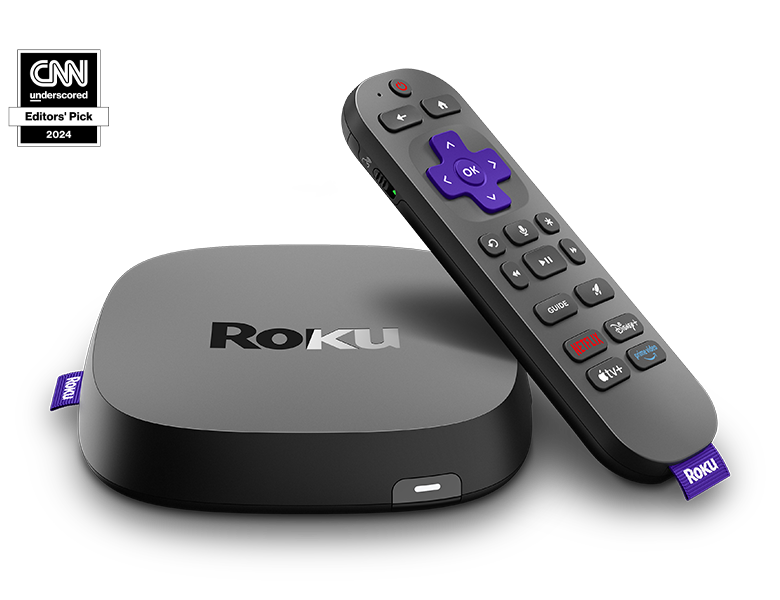
To understand the strategic logic, one needs to appreciate what Roku actually is. Founded in 2002, Roku spent two decades building a streaming OS that runs on millions of smart televisions and dedicated streaming sticks, earning a relationship with more than half of all U.S. broadband households.
That is not a content library — it is infrastructure.
It is the home screen, the search bar, the recommendation engine, and the gateway through which viewers discover and return to every other streaming service.
Fox, for all the strength of its live sports and news portfolio, never owned that pipe. It made appointment-viewing content — NFL games, Fox News, the FIFA World Cup now airing — but it relied on third-party platforms to get that content into living rooms at scale.
Roku changes that equation entirely. The combined company now controls content, distribution, and crucially, the first-party audience data that determines how advertising is priced and targeted across the entire connected TV stack.
LightShed Partners analyst Rich Greenfield, who had flagged Fox as a potential Roku acquirer in the days before the announcement, put the logic plainly: a Roku acquisition enables Fox to meaningfully reposition its narrative with investors toward a streaming future — a reorientation that began with Tubi but could never be completed without owning a platform at the scale Roku represents.
CONTENT PLUS PLATFORM: THE NEW POWER STRUCTURE
The most immediate consequence of this deal is the creation of what Fox is calling a “scaled next-generation media and technology company” sitting at the intersection of live content and streaming distribution.
On paper, the combined entity will be the third-largest player in U.S. television by share of viewing, trailing only YouTube and the Netflix-Disney duopoly that dominates subscription streaming.
The Roku Channel, which according to Nielsen already commands approximately 3 percent of all U.S. streaming viewership — placing it fifth behind YouTube, Netflix, Disney, and Prime Video — will sit alongside Tubi within the Fox portfolio.
The two services are designed to be complementary rather than duplicative: Tubi is primarily an ad-supported video-on-demand service, while Roku’s channel ecosystem is heavily focused on free ad-supported streaming TV, or FAST, channels.
Fox One, the direct-to-consumer subscription service Fox launched in 2025, slots in as the premium tier.
“This gives Fox greater control over discovery, data and monetisation at a time when TV viewing continues to shift away from traditional channels.” — Paolo Pescatore, PP Foresight
The advertising dimension is where the deal becomes genuinely transformative. Roku’s platform has accumulated years of first-party data on viewer behaviour — what people watch, when, for how long, and how they respond to advertising.
Combining that data infrastructure with Fox’s premium live inventory in sports and news creates an advertising proposition that rivals what Amazon has built with Prime Video and what Google has long operated through YouTube.
Connected TV advertising is the fastest-growing segment of the digital ad market, and Fox just acquired the dominant gateway through which that market is accessed in millions of U.S. homes.
REGULATORY TERRAIN AND OPEN PLATFORM COMMITMENTS
A transaction of this scale — combining a major broadcast and cable network group with one of the two dominant connected TV operating systems — is virtually certain to attract close attention from U.S. antitrust regulators.
The first-half-2027 closing timeline suggests both companies are fully aware that a thorough review process lies ahead. The deal arrives shortly after regulators cleared Paramount Skydance’s planned acquisition of Warner Bros.
Discovery, signalling some appetite for large-scale media consolidation, but the vertical nature of the Fox-Roku combination — content owner absorbing a distribution platform — raises distinct competitive questions.
Anticipating precisely these concerns, both companies made a public commitment at the time of announcement: Roku will continue to operate as an open, partner-friendly platform.
That means Netflix, Disney+, Max, and every other streaming service that currently reaches viewers through Roku-powered devices will not face discriminatory treatment in terms of placement, search results, or technical access. Whether regulators accept that commitment at face value — or demand structural conditions to enforce it — will be one of the central negotiations of the coming months.
Fox’s stock fell approximately 15 to 17 percent in the hours following the announcement, a market reaction that reflects investor caution about the scale of leverage required. Fox has secured a $12 billion bridge financing facility from Morgan Stanley to fund the cash component, and the company has projected pro forma net leverage of approximately 2.8 times on close.
Management expects the deal to be accretive to free cash flow per share by the second full year after closing and has committed to maintaining its investment-grade credit rating and continuing its shareholder capital return programme throughout.
WHAT IT MEANS FOR THE STREAMING INDUSTRY
For competitors and content partners alike, the Fox-Roku combination changes the competitive calculus in at least three significant ways.
First, it raises the floor for what a credible streaming strategy requires: content alone is no longer sufficient.
The race to control connected TV operating systems — already underway between Amazon (Fire TV), Google (Android TV/Google TV), Apple (tvOS), and Samsung (Tizen) — now has a major media company as a direct participant rather than a tenant.
Second, it accelerates the consolidation of the advertising technology stack in television. Advertisers who want to reach the Fox sports viewer and the Tubi binge-watcher and the general Roku audience can, in theory, do so through a single integrated buy backed by unified first-party data.
That kind of reach-plus-data combination is what has made Google and Meta dominant in digital advertising, and Fox is now positioning itself to replicate a version of it in connected TV.
Third, and perhaps most consequentially for the longer-term shape of the industry, it signals that the era of the independent streaming platform operator may be nearing its end.
Roku has spent 24 years maintaining its independence against relentless pressure from Amazon, Google, Samsung, and Apple. That independence ends here — absorbed not by a tech giant but by a content company that saw the platform as the piece it could not build on its own.
OUTLOOK: A NEW CHAPTER IN MEDIA CONVERGENCE
The Fox-Roku deal is the latest, and largest, expression of a convergence thesis that has been playing out across the media industry for a decade: that the future of television belongs to companies that control both what viewers watch and the technology through which they watch it.
Disney moved in this direction with its acquisition of streaming infrastructure assets. Amazon anchored Prime Video to its Fire TV ecosystem. Apple built its platform and its content arm in parallel.
Fox, which sold off its entertainment studios to Disney in 2019 to focus on live news and sports, has taken a different path — leaning into the premium value of live, unscripted, appointment-viewing content while steadily building the distribution infrastructure to monetise that content in the streaming era. Tubi was the first move. Roku is the decisive one.
Whether regulators permit the deal on the terms Fox and Roku have proposed, and whether the integration delivers the $400 million in annual synergies management has projected, are questions that will be answered over the next 18 to 24 months.
What is already clear is that the announcement alone has reshaped how investors, rivals, and advertisers think about the future of connected television.
In a landscape still absorbing the implications of the Paramount-Warner mega-merger, Fox has delivered the year’s most consequential media deal — and one with implications that will ripple well beyond the living rooms of American viewers.
Also Read

- AI Boom Keeps Air Cargo Capacity Tight — What It Means for Africa - July 3, 2026
- Mozambique’s First Port Community System: A Turning Point for African Trade - July 3, 2026
- 10 Most Efficient Ports in Sub-Saharan Africa - July 2, 2026

