
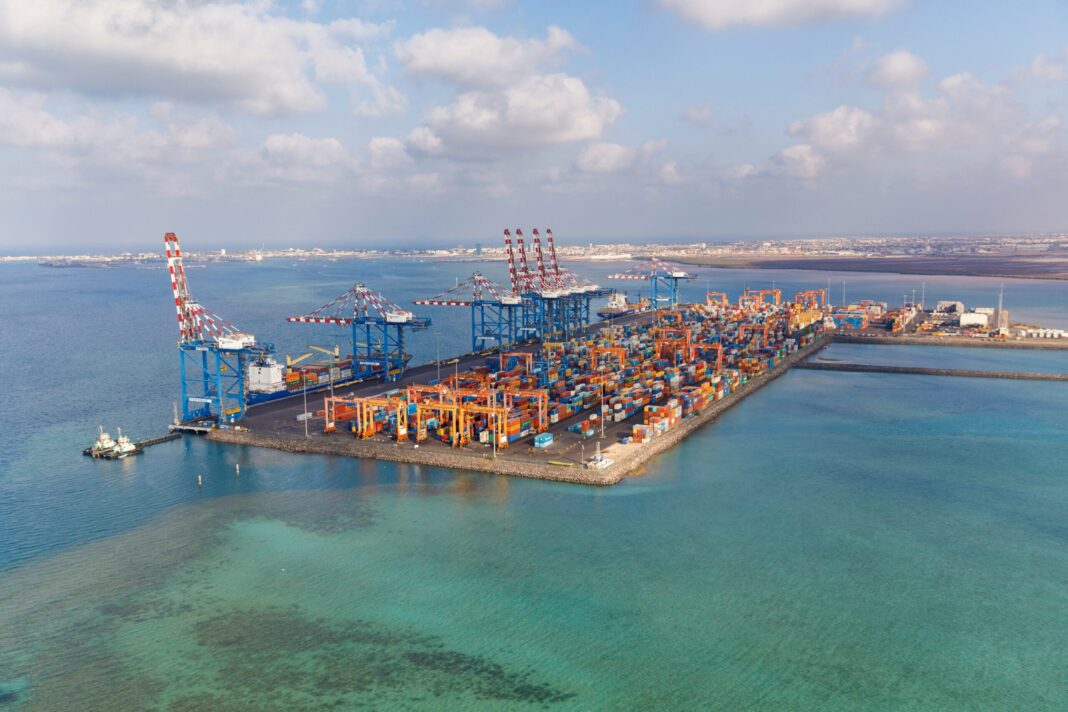
Every extra hour a container ship idles at anchor is an hour that ripples through supply chains, from a maize exporter in Beira to an auto-parts importer in Nairobi.
Port efficiency — how quickly a vessel is worked from arrival to departure — has become one of the sharpest indicators of a country’s trade competitiveness.
It shapes freight rates, determines which shipping lines call at a port, and ultimately decides whether African exporters can compete on price and reliability in global markets.
The most authoritative measure of this efficiency is the Container Port Performance Index (CPPI), jointly produced by the World Bank and S&P Global Market Intelligence.
The sixth edition, released in September 2025 and covering the 2020–2024 period, benchmarks 403 container ports worldwide using more than 175,000 vessel calls and 247 million container moves.
Its verdict on Sub-Saharan Africa is a mixed one: pockets of genuine progress, most notably in West Africa and the Horn of Africa, set against structural headwinds of limited automation, congested hinterland corridors, and knock-on disruption from the Red Sea shipping crisis.
This article ranks the ten standout performers in Sub-Saharan Africa, drawing on the latest CPPI data alongside operator disclosures and recent infrastructure investment news.
It is designed for freight forwarders, exporters, logistics planners and investors who need a working shortlist of the region’s most reliable gateways in 2026.
The Sub-Saharan Africa Top 10 at a Glance
| Rank | Port / Country | Operator | CPPI Signal | Standout Strength |
| 1 | Djibouti — Djibouti | Djibouti Ports & Free Zones Authority / DP World (Doraleh) | ~53rd globally | Red Sea & Horn of Africa transshipment hub |
| 2 | Dakar — Senegal | DP World Dakar | Sharpest gainer, Sub-Saharan Africa | Single-window customs, rail link to Mali |
| 3 | Mogadishu — Somalia | Port of Mogadishu / Albayrak | Regional surprise performer | New terminal operating system, revenue-share reform |
| 4 | San Pedro — Côte d’Ivoire | San Pedro Port Authority | ~211th globally | Cocoa & bulk export efficiency |
| 5 | Tema — Ghana | Meridian Port Services (MPS) | Leading West African container hub | Deepwater berths, semi-automated yard |
| 6 | Lomé — Togo | Lomé Container Terminal / MSC-TIL | 16.5m natural draft | Only regional port for third-generation vessels |
| 7 | Abidjan — Côte d’Ivoire | Abidjan Terminal / Vridi Canal | 25M+ tonnes/year | Sahel landlocked-country gateway |
| 8 | Walvis Bay — Namibia | Namport | New container terminal capacity | SADC corridor access, low congestion |
| 9 | Durban — South Africa | Transnet / ICTSI (from 2026) | World’s most-improved, CPPI 2025 | 25-year Pier 2 concession, crane investment |
| 10 | Malabo — Equatorial Guinea | Puertos de Guinea Ecuatorial | ~222nd globally | Gulf of Guinea oil & gas logistics |
1. Port of Djibouti, Djibouti
Djibouti remains the benchmark for Sub-Saharan African port efficiency, landing among the top performers continent-wide and roughly 53rd out of 403 ports globally in the latest CPPI.
Its edge is geographic as much as operational: sitting at the mouth of the Red Sea and the Bab-el-Mandeb Strait, Djibouti has spent fifteen years building itself into a transshipment and bunkering hub for traffic moving between Asia, Europe and East Africa.
The Doraleh Container Terminal, developed with DP World and now under Djibouti Ports and Free Zones Authority oversight, anchors that ambition, alongside free-zone incentives designed to draw manufacturing and logistics investment.
For shippers routing cargo toward the Horn of Africa or transiting the Red Sea corridor, Djibouti continues to offer some of the fastest vessel turnaround times on the continent.
2. Port of Dakar, Senegal
Dakar delivered the single biggest efficiency turnaround in Sub-Saharan Africa in the latest CPPI cycle, climbing from a deeply negative score in 2023 into positive territory in 2024 — one of the sharpest gains recorded anywhere in the world.
DP World, which has operated the port since 2008, credits the leap to a port community system that digitally links customs, shipping lines and logistics providers, alongside a streamlined single-window clearance process that has cut cargo dwell times.
Road upgrades and ongoing rail rehabilitation toward Mali have strengthened hinterland connectivity, while new direct shipping links from Asia have boosted liner confidence in the port.
| Dakar’s port community system and single-window customs process delivered one of the sharpest year-on-year efficiency gains recorded anywhere in the 2025 Container Port Performance Index.
— World Bank / S&P Global Market Intelligence, CPPI 2025 |
3. Port of Mogadishu, Somalia
Perhaps the most striking result in this year’s rankings is Mogadishu’s rise as East Africa’s most efficient gateway, outperforming longer-established regional rivals.
Operated by Turkish firm Albayrak since 2014, the port has pushed through a new terminal operating system and a revised revenue-sharing arrangement with the Somali government, both aimed at accelerating cargo throughput and attracting greater trade volumes.
Given Somalia’s fragile security backdrop, the improvement is a notable proof point that focused operational reform can outweigh legacy disadvantages — and a signal worth watching for shippers exploring alternative East African routings.
4. Port of San Pedro, Côte d’Ivoire
Côte d’Ivoire’s second port has quietly become one of West Africa’s more consistent performers, ranking in the low 200s globally in the latest index.
San Pedro’s efficiency is closely tied to its role as the country’s primary cocoa and bulk export gateway, where predictable export scheduling — loading vessels against fixed harvest and shipment windows — tends to boost crane productivity and cut operational delays, a pattern the CPPI report highlights across export-oriented African ports generally.
5. Port of Tema, Ghana
Tema has cemented its position as Ghana’s principal container gateway and one of West Africa’s busiest hubs, handling the bulk of the country’s containerised trade.
Meridian Port Services, the terminal operator, has invested in deepwater berths and semi-automated yard equipment capable of handling larger vessels, positioning Tema as a serious alternative to Lomé and Abidjan for shipping lines serving the Gulf of Guinea.
Its efficiency gains have been reinforced by continued expansion of yard capacity and gate systems designed to reduce truck turnaround times.
6. Port of Lomé, Togo
Lomé has built its reputation on a single structural advantage: a natural draft of 16.5 metres, making it the only port in West Africa capable of receiving third-generation container vessels without dredging.
The Lomé Container Terminal, developed and operated by Mediterranean Shipping Company’s Terminal Investment Limited, has leveraged that depth to become a transshipment hub serving landlocked Burkina Faso, Mali and Niger, alongside Togo’s own trade.
That combination of deep water and modern terminal management keeps vessel turnaround times competitive by regional standards.
7. Port of Abidjan, Côte d’Ivoire
Abidjan handles more than 25 million tonnes of cargo a year and remains West Africa’s most diversified maritime gateway, built around the Vridi Canal that gives deep-sea vessels direct access to the lagoon port.
Beyond serving Côte d’Ivoire’s own trade, Abidjan is a critical corridor for landlocked Burkina Faso, Mali and Niger, and continues to attract major shipping-line calls.
Ongoing modernisation of yard operations and berth capacity is aimed at keeping pace with rising volumes, though congestion during peak periods remains a watch-point for shippers planning tight delivery windows.
8. Port of Walvis Bay, Namibia
Walvis Bay has become one of Southern Africa’s more closely watched infrastructure stories, with the Namibian Ports Authority expanding container terminal capacity to capture cargo that might otherwise route through congested South African ports.
Its relatively low congestion levels and position on the Walvis Bay–Ndola–Lubumbashi corridor make it an increasingly attractive option for shippers serving Zambia, the Democratic Republic of Congo and Botswana, even as some recent index editions have flagged ranking volatility that operators attribute to data and methodology questions rather than a genuine operational decline.
9. Port of Durban, South Africa
Durban tells the most dramatic turnaround story in this year’s rankings. In earlier CPPI cycles it ranked at the very bottom of the global index, weighed down by equipment shortages, scheduling bottlenecks and landside congestion that left ships queuing for days before berthing.
The 2025 edition of the index recognised Durban as the world’s most improved port: waiting times that once stretched to twenty vessels at anchor fell to zero, and the share of total port time spent actually working cargo at berth rose sharply.
The catalyst was a 25-year concession awarded in December 2025 to International Container Terminal Services Inc to modernise Durban Container Terminal Pier 2, alongside a R967 million investment in new ship-to-shore cranes and greater private-sector participation in terminal management.
Durban remains Sub-Saharan Africa’s busiest multi-purpose port and its largest container terminal by volume, and its recovery trajectory is arguably the most consequential story in African port logistics heading into 2027.
| Durban’s Turnaround, by the Numbers
• 25-year Pier 2 concession awarded to ICTSI, effective December 2025 • Terminal capacity targeted to rise from 2 million to 2.8 million TEU by 2026 • R967 million committed to new ship-to-shore cranes at the container terminal • Vessel waiting times cut from 20 ships at anchor to zero during peak stabilisation • Berth utilisation share rose from roughly 52% in 2024, per Transnet-linked reporting |
10. Port of Malabo, Equatorial Guinea
Rounding out the list, Malabo ranks among the more efficient Central African gateways, positioned around 222nd globally in the latest index.
Its efficiency is closely tied to Equatorial Guinea’s oil and gas sector, where specialised cargo and equipment movements tend to follow tighter, more predictable schedules than general containerised trade.
While overall volumes are modest compared with West African peers, Malabo’s consistency has earned it a steady place among the region’s better-run facilities.
The Bigger Picture: Why Sub-Saharan Africa Still Lags
Even the region’s best performers trail global leaders such as Morocco’s Tanger Med and Egypt’s Port Said, both of which rank inside the world’s top ten.
The World Bank attributes the gap to a familiar set of structural constraints: limited automation, weaker hinterland rail and road connectivity, thinner competition between terminal operators, and import-heavy trade profiles that make cargo harder to schedule than export-driven flows.
The 2024 Red Sea crisis compounded matters, rerouting vessels around the Cape of Good Hope and adding congestion at ports never designed to absorb the extra traffic.
Yet the data also point to a clear playbook for improvement. Dakar’s digital single-window system, Durban’s private-terminal concession, and Mogadishu’s revenue-sharing reform all share a common thread: targeted investment paired with institutional reform outperforms scale alone.
For a region where the majority of ports still rank below the global median, that is the more encouraging headline — efficiency gains are achievable, and increasingly, they are being achieved.
What This Means for Shippers and Exporters
- Route flexibility pays off: shippers moving cargo into the Sahel now have genuine choices between Lomé, Tema, Abidjan and San Pedro, each with different draft, congestion and hinterland trade-offs.
- Durban’s recovery is worth monitoring closely through 2026 and 2027 as the ICTSI concession matures, particularly for South African and regional exporters who have absorbed years of delay-related costs.
- East African options are shifting: Mogadishu’s rise and Djibouti’s consistency both merit a fresh look for cargo previously defaulted to Mombasa.
- Digital customs platforms, as seen in Dakar, are becoming a differentiator — ports without single-window systems risk falling further behind on the index.
Sub-Saharan Africa’s port sector is no longer a uniform story of congestion and delay.
Dakar’s reform-driven leap, Durban’s dramatic recovery, and the steady performance of West African gateways like Tema and Lomé show that efficiency gains are within reach when investment is paired with institutional discipline.
For logistics planners, freight forwarders and exporters, the practical takeaway is to treat port selection as a moving target — reviewed against the latest data, not last decade’s reputation.
Also Read
How Africa could change the tide to become a net exporter
Partnering for success: What to look for in an international freight forwarder

- Inside Isuzu’s Plan to Make South Africa the Truck Manufacturing Hub for Africa - October 12, 2026
- UPF Group Expands African Logistics Network with New Rwanda Office - September 18, 2026
- DP World’s Africa Network Is Growing While Jebel Ali Takes a Heavy Hit - August 15, 2026

