
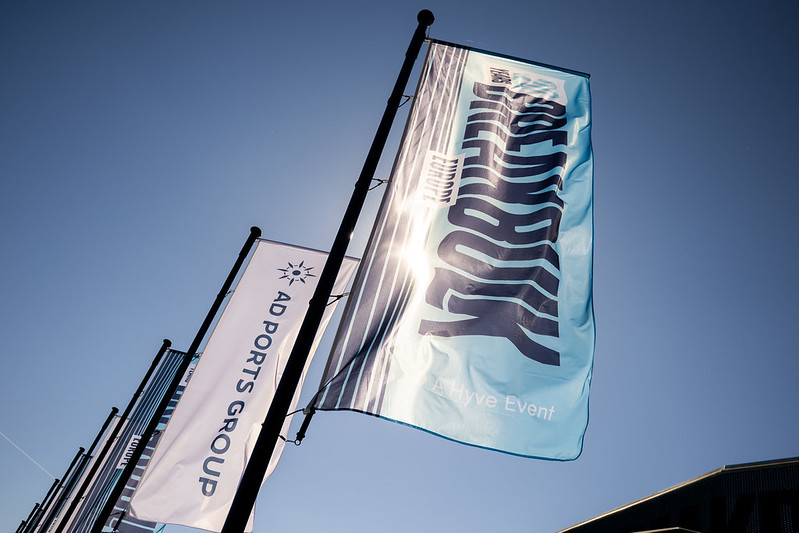
For Africa’s logistics sector, the timing could hardly be more significant. The continent is in the middle of a structural shift: infrastructure pipelines are growing, energy transition investments are accelerating, and operators from Mombasa to Maputo, Lagos to Durban, are being forced to handle cargo types and project scales that would have been exceptional just a decade ago.
Rotterdam is where many of those supply chains begin — and Breakbulk Europe 2026 is where the contracts, partnerships, and conversations that shape them will happen.
This preview breaks down the key themes, the African presence at the event, and the opportunities that logistics professionals from across the continent should be tracking.
Africa’s Growing Role in Global Breakbulk Trade
Africa’s emergence as a significant destination — and increasingly, an originating region — for breakbulk and project cargo is no longer a projection. It is a market reality being recognised by the world’s largest logistics operators.
DHL Global Forwarding, one of the defining names in African project logistics, has committed more than €300 million in investment into Sub-Saharan Africa, reflecting long-term confidence in the region’s infrastructure and energy pipelines.
The company’s outgoing CEO for the Middle East and Africa noted in Breakbulk Magazine’s 2026 Global Outlook that the region is seeing consistent investment in infrastructure, energy, and industrial development, with breakbulk and project cargo central to developments ranging from renewable energy component movements to large-scale infrastructure projects.
That assessment is backed by hard numbers. The Middle East and Africa freight and logistics market is estimated at USD 321 billion in 2026 and is projected to grow to USD 416 billion by 2031 — a compound annual growth rate of 5.34%.
Sea freight and inland waterways are among the fastest-growing sub-segments, driven by port upgrades, expanded berths, and new greenfield routes serving landlocked economies.
On the operator side, African-focused multipurpose carriers are investing to match the opportunity.
Breadbox Shipping Lines, a West African specialist, is implementing a comprehensive fleet renewal programme, with four new 3,800 dwt coasters due by end-2026, followed by a further series of 5,800 dwt tweendeck vessels — driven by growing demand from mining, oil and gas, and energy infrastructure.
Universal Africa Lines and UPF Group are also expanding, with UPF Group opening a new Douala, Cameroon office.
A new direct coastal breakbulk liner service linking Dar es Salaam and Mombasa to South Africa is also set to launch, providing dedicated southbound connectivity for East African cargo.
Key Themes at Breakbulk Europe 2026 Relevant to Africa
The 2026 conference agenda at Rotterdam Ahoy is structured around several major themes — each of which carries direct relevance for African project cargo and logistics professionals.
1. Geopolitics and Trade Route Disruption
One of the most anticipated sessions is titled “Geopolitics in Action: The Domino Effect on Trade Routes,” examining how disruptions in the Middle East, the Black Sea, and the Malacca Strait are reshaping global project cargo flows — including war-risk insurance, longer voyages, and shifting risk allocation frameworks.
For African ports, this is no abstract discussion.
The effective closure of the Suez Canal corridor from late 2023, compounded by the Strait of Hormuz closure in early 2026, redirected significant cargo volumes around the Cape of Good Hope — testing South African port infrastructure, creating bunkering demand along the southern coast, and demonstrating how swiftly African logistics networks can be thrust into a front-line role in global supply chains.
Ports in Mombasa, Maputo, Durban, and Walvis Bay are now under sustained scrutiny from international shippers who previously paid them little attention.
2. Energy Transition: What Gets Built and What Stalls
A dedicated session — “Decarbonisation Reality Check: What Gets Built and Why” — will examine how energy security concerns and return-on-investment pressures are reshaping the pace of decarbonisation investment, with many renewable projects stalling before Final Investment Decision while capital flows toward hybrid models.
For Africa, this tension is acutely felt. The continent has significant renewable energy pipelines — wind in South Africa and East Africa, solar across the Sahel, hydro projects from Lesotho to the DRC — yet financing and infrastructure constraints continue to slow progress.
At the same time, oil and gas capex remains substantial, with countries including Mozambique, Namibia, Senegal, and Tanzania emerging as significant producers.
Cargo requirements for both energy streams — turbine components, subsea equipment, offshore structures, pipeline materials — are substantial and will define breakbulk demand across the continent for the next decade.
Mozambique accounts for approximately 23% of all projected African oil and gas capex, anchored by the $20bn Area 1 LNG project.
Simultaneously, wind turbine component shipments to South Africa are a growing segment for project cargo specialists. Both streams generate significant breakbulk and heavy-lift cargo requirements routed through European ports including Rotterdam.
3. Technology, AI, and the Digital Logistics Platform
The Breakbulk Voices innovation stage will focus on the future of project logistics, with sessions covering automation, AI integration, and digital freight platforms.
This is increasingly relevant for African operators, as digitisation becomes a threshold requirement rather than a competitive advantage.
Electronic cargo tracking, automated customs clearance, and integrated transport management platforms are now being rolled out across the continent’s major trade corridors.
Governments aligning logistics reform with the African Continental Free Trade Area (AfCFTA) framework are prioritising digital trade facilitation, and logistics companies that cannot meet these standards risk being excluded from major project tenders.
Rotterdam will provide a view of where leading global operators are setting that bar.
4. ESG, Green Shipping, and the Breakbulk Green World Awards
The Breakbulk Green World Awards 2026 will recognise outstanding achievements across categories including Best Maritime Transport, Sustainable Ship Design, and Best Overland Transport.
The accompanying ESG discussion is particularly relevant as African ports and operators face growing pressure from international project owners and financiers to demonstrate credible environmental credentials.
EU regulations including the Emissions Trading System (ETS) and FuelEU Maritime are influencing pricing and investment decisions across the shipping industry.
For African logistics operators handling European-originating project cargo, understanding how these cost structures are evolving directly affects tender pricing, carrier selection, and long-term contract terms.
African Companies and Presence at the Event
Africa is not merely a topic of discussion at Breakbulk Europe 2026 — it is represented on the exhibition floor.
Africa Global Logistics (AGL), one of the continent’s foremost multimodal operators, is confirmed as a partner at the event, bringing its full-chain capability spanning port, rail, logistics, maritime, and air to an audience of international project cargo decision-makers.
AGL’s presence in Rotterdam is a signal of how seriously Africa-focused operators are taking the opportunity to build European relationships.
For EPC companies, energy project developers, and shipping lines with African project pipelines, Rotterdam is often where African logistics expertise first enters their field of view.
Beyond AGL, the event draws attendance from across the breakbulk community active on the continent — including SAL Heavy Lift, which operates a twice-monthly service connecting East African project cargo flows via the Cape of Good Hope with the Arabian Gulf, India, and East Asia, and DHL Industrial Projects, which maintains deep mining and energy sector capabilities across Sub-Saharan Africa.
Opportunities for African Logistics Companies at the Event
Whether or not African logistics businesses are physically present at Rotterdam Ahoy this June, the event creates downstream opportunities that professionals across the continent should be actively pursuing.
Positioning as Last-Mile Partners
The most direct commercial opportunity is positioning as a last-mile or in-country delivery partner for international project cargo operators.
Many of the 700-plus exhibitors at Rotterdam — global freight forwarders, specialized carriers, port agents — are actively seeking reliable African partners capable of handling port-side clearance, inland haulage, and final delivery of heavy or oversized cargo.
African companies with documented track records in these capabilities have a genuine opening.
Intelligence on Pipeline Projects
For logistics operators who are not attending in person, monitoring the Rotterdam agenda and post-event coverage is a legitimate intelligence exercise.
Conference sessions covering energy project outlooks, mining and metals demand, and infrastructure financing pipelines will generate public-domain insights into which projects are moving toward Final Investment Decision — and therefore which cargo movements are likely to materialise in the next 12 to 36 months.
Early awareness of these pipelines translates into earlier bid preparation.
Understanding What the Market Now Requires
Rotterdam sets the standard for what international project cargo operators expect from their logistics partners.
Digital tracking, ESG reporting, multimodal capability, and documented safety records are no longer differentiators — they are entry requirements.
African logistics companies that are not investing in these capabilities risk being passed over in favour of international operators willing to absorb the in-country risk themselves.
The Rotterdam–Africa Corridor: Why It Matters
Rotterdam’s significance for African project cargo is not incidental. As Europe’s largest port and a central hub for multipurpose and heavy-lift vessel deployment, it is a primary origination point for the industrial equipment, energy infrastructure components, and construction materials that feed Africa’s largest projects.
Steel products, sawn timber, pipes, and construction materials destined for North African ports; wind turbine components bound for South Africa; offshore modules destined for Mozambique’s LNG developments — a substantial proportion of this cargo moves through the Port of Rotterdam.
The relationships formed at Breakbulk Europe directly influence which carriers, forwarders, and in-country partners are selected for these movements.
The recent geopolitical disruption in the Red Sea and Hormuz corridors has also elevated Rotterdam’s role as an indirect routing hub for African-bound cargo.
Vessels that would previously have transited quickly through European waters are now making longer Atlantic passages around Africa’s southern tip — and the operational planning for those voyages runs through Rotterdam’s logistics community.
Rotterdam Ahoy hosts Breakbulk Europe for the fifth consecutive time in 2026, a reflection of the Port’s centrality to the global project cargo network.
The Port of Rotterdam’s international affairs team is among the event’s institutional supporters, and Rotterdam’s connectivity to African ports via feeder and direct multipurpose services makes it the natural home for conversations about African project logistics.
Final Thoughts: Show Up, or Keep Up
Breakbulk Europe 2026 will generate an enormous volume of intelligence, relationship capital, and market signal — most of which will circulate within the 11,400 professionals who attend.
Africa’s logistics sector is at a moment where it can either be part of that conversation, or spend the following 12 months reacting to decisions made without it.
For operators who can attend, the ROI is clear: the event is where long-term partnerships are initiated, where carrier and forwarder selection decisions for major projects are informally seeded, and where the market consensus on pricing, capacity, and risk is formed.
For those who cannot make the trip to Rotterdam, the next best move is to follow the event closely, engage with post-event reporting, and use the intelligence generated to benchmark capabilities, refine service offerings, and align commercial development with the project pipelines that Rotterdam will reveal.
Africa’s infrastructure moment is now. Breakbulk Europe 2026 is where the world’s project cargo industry will come to talk about it.
Also Read
Break bulk shipping explained: Everything you need to know
How Artificial Intelligence Is Re-Engineering Intralogistics

- UPF Group Expands African Logistics Network with New Rwanda Office - September 18, 2026
- DP World’s Africa Network Is Growing While Jebel Ali Takes a Heavy Hit - August 15, 2026
- U.S. Truck Freight Prices Fall 1.8% in July as Diesel Costs Slide - August 13, 2026

