

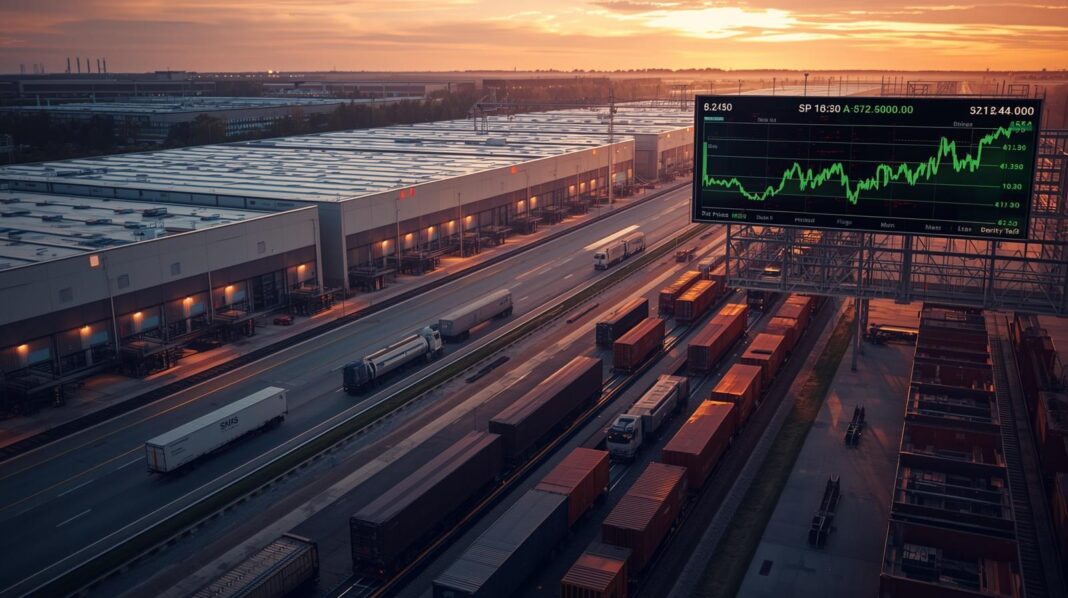
US stock markets surged on Monday after investors welcomed a breakthrough US–Iran agreement aimed at ending hostilities and reopening the Strait of Hormuz, a key global shipping corridor.
The Nasdaq Composite rose 2.2%, leading the rally, while the S&P 500 climbed 1.3% and the Dow Jones Industrial Average advanced 1.2%, building on strong momentum from the previous week.
Oil prices fell sharply as markets priced in improved energy supply stability and reduced geopolitical risk.
The combined movement in equities and energy markets signals a broader shift in global risk sentiment with direct implications for logistics and supply chains.
What the US Market Rally Signals for Global Logistics
Rising US stock indices typically reflect expectations of stronger economic activity, higher corporate output, and increased consumer demand.
For logistics companies, this often translates into:
- Higher freight volumes
- Increased manufacturing output
- Stronger retail and e-commerce shipments
- Greater demand for warehousing and distribution
When the Dow, S&P 500, and Nasdaq rise together, it signals broad-based confidence that benefits transportation networks across trucking, rail, air cargo, and maritime shipping.
Falling Oil Prices Reduce Freight Costs
One of the most immediate effects of today’s market reaction is the decline in oil prices.
This directly impacts logistics operations:
- Lower diesel costs for trucking fleets
- Reduced aviation fuel expenses for cargo airlines
- Improved margins for shipping companies
- More competitive freight pricing across supply chains
Fuel savings often translate into either higher profitability or lower transportation costs for customers.
Strait of Hormuz Stability Improves Global Trade Confidence
The Strait of Hormuz is a critical route for global energy and trade flows. Any disruption in this corridor typically creates volatility in shipping insurance, freight rates, and delivery schedules.
The easing of tensions improves:
- Shipping route reliability
- Insurance cost stability
- Inventory planning accuracy
- Global procurement confidence
For international logistics networks, predictability is as valuable as cost reduction.
US Logistics Investment Outlook Strengthens
Stronger equity markets also improve access to capital for logistics firms. Higher valuations can support:
- Warehouse automation investments
- Fleet modernization programs
- Expansion of distribution networks
- Adoption of electric and alternative fuel vehicles
- Digital supply chain platforms
This accelerates modernization across the logistics industry.
Outlook
The rally in the Dow, S&P 500, and Nasdaq reflects renewed optimism driven by easing geopolitical tensions and falling oil prices.
For logistics and supply chain operators, this environment could support lower operating costs, stronger freight demand, and improved global trade stability—if current conditions persist.
Also Read
How Fox’s Roku Acquisition Could Reshape the Future of Streaming Technology

- Dow, S&P 500, Nasdaq Jump: US Stocks Rally as US–Iran Deal Eases Oil and Supply Chain Pressures - June 15, 2026
- How Fox’s Roku Acquisition Could Reshape the Future of Streaming Technology - June 15, 2026
- The Mega Logistics Behind FIFA World Cup 2026:How Three Countries Coordinate a Single Tournament - June 12, 2026

