
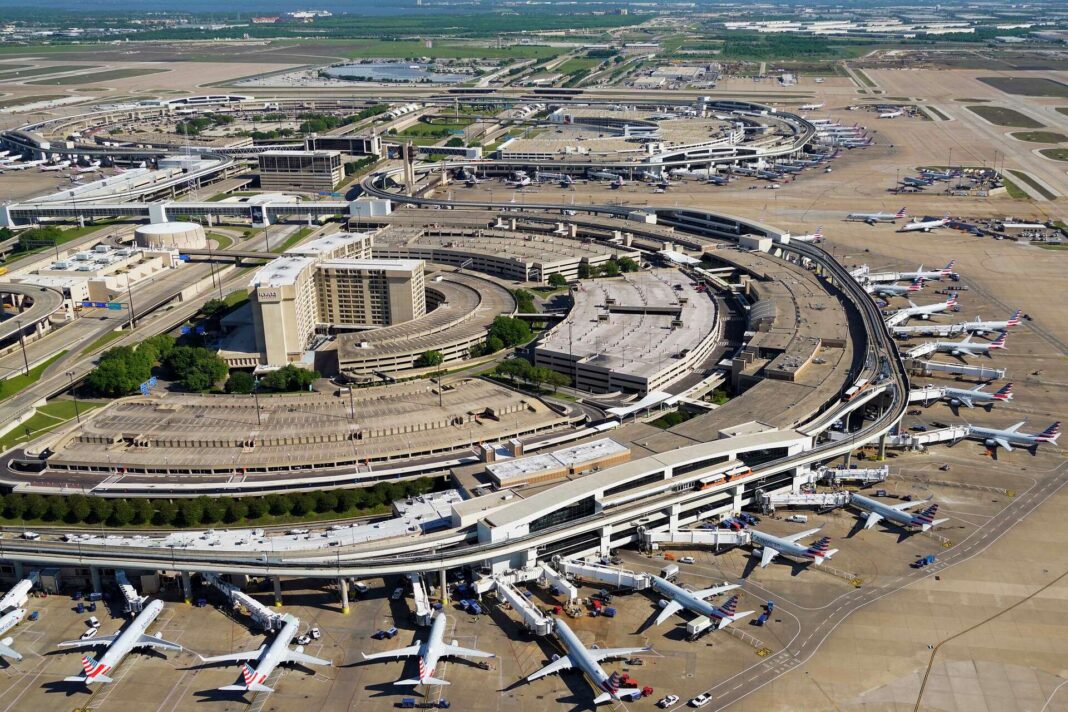
Severe thunderstorms tore through North Texas on Tuesday, May 19, triggering Federal Aviation Administration ground stops at both Dallas-Fort Worth International Airport and Dallas Love Field — and leaving more than 400 flights canceled across the two airports in one of the most disruptive weather events to hit the region’s aviation network ahead of a major holiday travel weekend.
The FAA ordered a ground stop at DFW until at least 3 p.m., with flight tracking data showing over 350 cancellations at the airport by 2 p.m. Tuesday.
Travelers at DFW were experiencing average departure delays of approximately one hour.
The disruption did not stop at DFW’s gates. The FAA subsequently extended the ground stop order to Dallas Love Field Airport, which recorded 55 cancellations and nearly 90 delays, with an average delay of 30 minutes.
By late afternoon, the situation had deteriorated further. After the ground stops were eventually lifted, a ground delay program took effect at DFW and was expected to remain in place until at least midnight.
Departure delays at DFW climbed to 172 minutes, while Love Field saw 30-minute delays — with over 800 total delayed flights across both airports combined by evening.
A Perfect Storm Before Memorial Day
The timing could hardly have been worse. The flight cancellations arrived as Texans were preparing to travel ahead of Memorial Day — one of the busiest domestic travel periods of the year — compounding the misery for passengers who had planned holiday getaways.
The National Weather Service’s Fort Worth office had warned ahead of the storms that North Texas would face the possibility of large hail and damaging winds.
Heavy rain, lightning, and reduced visibility created conditions in which air traffic managers and ramp workers faced real safety risks, prompting the FAA to slow and ultimately suspend operations to maintain safe aircraft separation and protect ground crews exposed to lightning.
The FAA’s own advisories noted the ground stops carried a 30 to 60 percent chance of being extended — a warning that ultimately proved well-founded as storm systems continued pushing through the metro area throughout the afternoon.
Hub Disruption With Nationwide Consequences
DFW serves as the primary hub for American Airlines, which operates hundreds of daily departures out of North Texas.
When a ground stop takes effect at a hub of this scale, the cascade of consequences extends well beyond early morning departures.
Aircraft and crews that fall out of position in Dallas quickly create downstream cancellations through afternoon and evening flights across the entire country.
A delay in Dallas can become a missed connection in Chicago, Atlanta, or Los Angeles. A canceled flight in the afternoon can disrupt an entire travel itinerary stretching over multiple days.
Airlines typically attempt to recover by reassigning aircraft and crews once weather clears, but recovery depends heavily on how long the disruption lasts and how quickly storms move out of the region.
Love Field told a parallel story. Southwest Airlines operates 18 of Love Field’s 20 gates, making the carrier especially vulnerable when weather conditions force airport restrictions at the smaller downtown Dallas airport.
With its tightly integrated point-to-point network, even a few hours of disruption at Love Field can ripple across Southwest’s schedule from coast to coast.
What Passengers Should Know
For travelers still holding bookings through Dallas this week, the advice is straightforward: check your flight status directly with your airline before heading to the airport, as delays and knock-on cancellations may continue into Wednesday as airlines work to reposition aircraft and crew across the network.
Both American Airlines and Southwest Airlines have historically issued travel waivers during significant weather events, allowing passengers to rebook without change fees.
Affected travelers are encouraged to contact their carrier directly or monitor their airline’s app for the latest rebooking options rather than waiting at the airport.
A ground stop — one of the FAA’s most restrictive traffic management tools — works by preventing aircraft bound for an affected airport from departing their origin cities until conditions improve.
This means passengers in New York, Los Angeles, Chicago, and dozens of other cities bound for Dallas were held on the ground at their home airports, with no clear departure time, as storms raged over North Texas.
Scale of the Disruption
DFW International Airport is consistently ranked among the ten busiest airports in the world by total passenger volume, processing tens of millions of travelers annually.
Tuesday’s event serves as a sharp reminder of how quickly severe weather can bring even the most sophisticated aviation hub to a near-complete standstill — and how the effects of a localized storm can reverberate through the national air travel network for hours, and sometimes days, afterward.
With Memorial Day weekend officially underway, airline operations teams will be working around the clock to restore normal scheduling.
Passengers are advised to remain flexible, monitor FAA delay notifications, and build extra time into any connections routed through the Dallas-Fort Worth area in the days ahead.
Also Read
What Africa’s Logistics Sector Can Expect from Breakbulk Europe 2026
How Artificial Intelligence Is Re-Engineering Intralogistics

- UPF Group Expands African Logistics Network with New Rwanda Office - September 18, 2026
- DP World’s Africa Network Is Growing While Jebel Ali Takes a Heavy Hit - August 15, 2026
- U.S. Truck Freight Prices Fall 1.8% in July as Diesel Costs Slide - August 13, 2026

