
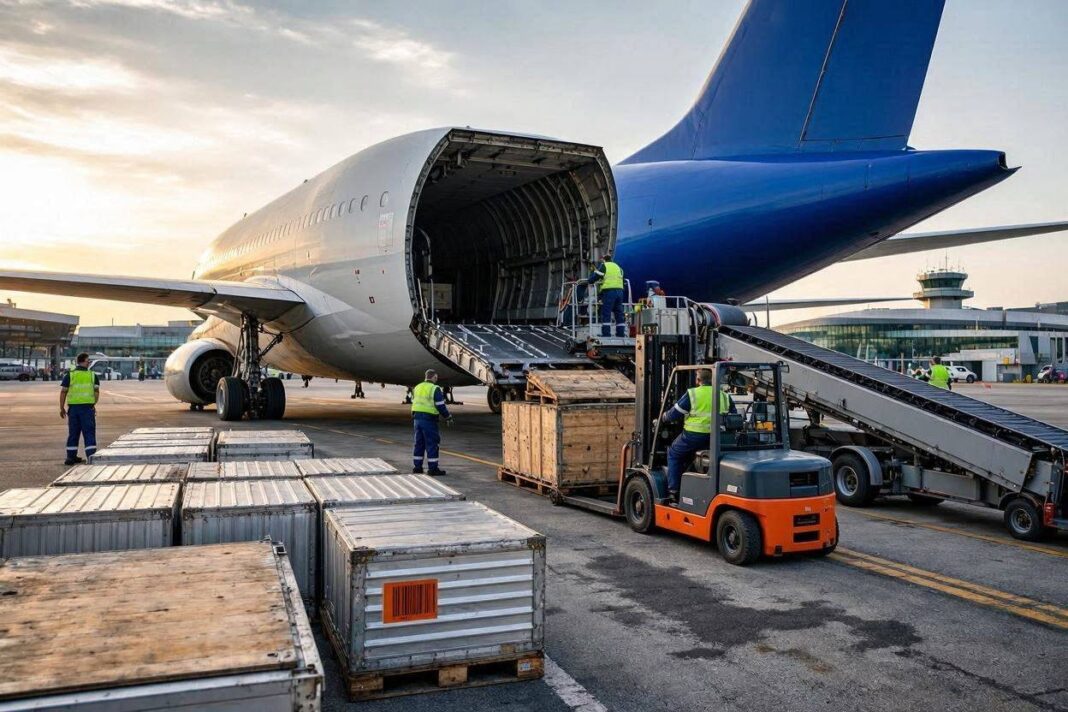
Global air cargo demand continued its strong upward trajectory in June 2026, with demand outpacing capacity growth despite ongoing geopolitical tensions and softer global export orders, according to the latest data released by the International Air Transport Association (IATA).
Total demand, measured in cargo tonne-kilometres (CTK), increased by 8.5% compared with June 2025, while international cargo demand climbed 9.6% year-on-year.
Over the same period, industry capacity, measured in available cargo tonne-kilometres (ACTK), rose by 4.4%, resulting in higher aircraft utilisation and stronger cargo load factors.
“Air cargo demand grew 8.5% year-on-year in June. While North America was the strongest contributor to growth, demand in all regions was in positive territory compared to last year,” said Willie Walsh, IATA’s Director General.
“Demand growth outpaced capacity at the global level and in all regions except Latin America and the Caribbean.
Demand also grew faster than global trade, supported by high-value technology products and urgent shipments.
While this all gives strong reasons for optimism in the second half of 2026, risks remain—continuing hostilities in the Middle East and a renewed focus on tariffs by the US among them.”
Global Market Continues to Strengthen
The latest figures indicate that the air cargo sector remains one of the strongest-performing segments of the aviation industry despite broader economic uncertainty.
Global cargo load factors increased by 1.7 percentage points to 46.9%, reflecting tighter market conditions as demand continued to grow faster than available capacity.
International cargo load factors reached 52.1%, highlighting the continued strength of cross-border freight movements.
According to IATA, global trade expanded by 5.2% year-on-year during the period, while global manufacturing activity remained in expansion territory.
However, new export orders remained below the 50-point threshold for a fourth consecutive month, suggesting that recent cargo growth has been driven more by high-value and time-sensitive shipments than by a broad recovery in global merchandise trade.
North America Emerges as the Strongest Performer
North American airlines recorded the strongest regional performance in June, posting a 13.1% increase in cargo demand compared with the same month last year.
Capacity in the region also expanded by 6.2%, allowing carriers to capture growing demand for technology products, including AI infrastructure and semiconductor shipments.
IATA noted that North American carriers generated almost 38% of the industry’s total traffic growth, making the region the largest contributor to the global market expansion during the month.
Asia-Pacific carriers also delivered solid results, with cargo demand increasing 7.9%, while European airlines recorded 6.9% growth as international trade flows remained resilient.
Africa Records Demand Growth Despite Capacity Cuts
African airlines experienced a mixed month.
Cargo demand across the continent increased by 4.7% year-on-year, but available cargo capacity declined by 7.1%, the only region globally to report a significant reduction in capacity.
Despite fewer available cargo tonne-kilometres, African carriers recorded the largest improvement in cargo load factors, which rose 5.4 percentage points to 48.1%.
The higher utilisation suggests that airlines are operating fuller aircraft even as available cargo space remains constrained, a trend that could affect exporters seeking reliable air freight capacity.
IATA also noted that the Africa–Asia trade corridor extended its growth streak to 12 consecutive months, highlighting the strengthening trade relationship between African exporters and Asian markets.
Middle East Recovery Continues
Middle Eastern airlines returned to growth during June, recording a 5.6% increase in cargo demand after experiencing significant disruption during the same period last year because of regional conflict.
However, the recovery remains uneven.
Major trade corridors linking Europe and the Middle East continued to struggle, with Europe–Middle East traffic declining 41.1% year-on-year, while Middle East–Asia volumes fell 4.1%, reflecting the ongoing impact of geopolitical instability on regional air cargo networks.
Asia-Linked Trade Routes Continue to Expand
Asia remained the engine of global air cargo growth.
The Asia–North America corridor recorded the strongest performance among all major trade lanes, growing 14.7% for the fifth consecutive month.
Other expanding corridors included:
- Europe–Asia: +7.1%
- Within Asia: +7.2%
- Africa–Asia: +0.9%, marking a full year of uninterrupted growth.
By contrast, Europe–North America traffic remained flat, while Gulf-linked trade routes continued to contract because of operational disruptions associated with the conflict in the Middle East.
Lower Fuel Prices Offer Some Relief
Airlines also benefited from easing fuel costs during June.
Jet fuel prices fell by approximately 20% compared with May as oil flows through the Persian Gulf improved.
Nevertheless, fuel prices remained 45.8% higher than a year earlier, meaning operating costs continue to exceed historical norms despite the recent monthly decline.
Air cargo yields also slipped 1.2% month-on-month but remained 34% above June 2025 levels.
Outlook Remains Positive Despite Risks
The June results reinforce expectations that global air cargo demand will remain resilient during the second half of 2026, supported by technology-related shipments, resilient manufacturing activity and continued growth in international trade.
However, IATA cautioned that several risks could weigh on future performance, including ongoing conflict in the Middle East, uncertainty surrounding US trade policy and persistently weak export orders.
Even so, with demand continuing to outpace capacity across most regions, airlines are entering the second half of the year with favourable market conditions and stronger aircraft utilisation than a year ago.
Also Read
- AI Boom Keeps Air Cargo Capacity Tight — What It Means for Africa
- Navigating global trade: Trends shaping the future of cargo shipping

- UPF Group Expands African Logistics Network with New Rwanda Office - September 18, 2026
- DP World’s Africa Network Is Growing While Jebel Ali Takes a Heavy Hit - August 15, 2026
- U.S. Truck Freight Prices Fall 1.8% in July as Diesel Costs Slide - August 13, 2026

, increased by 8.5% compared with June 2025, while international cargo demand climbed 9.6% year-on-year.)