
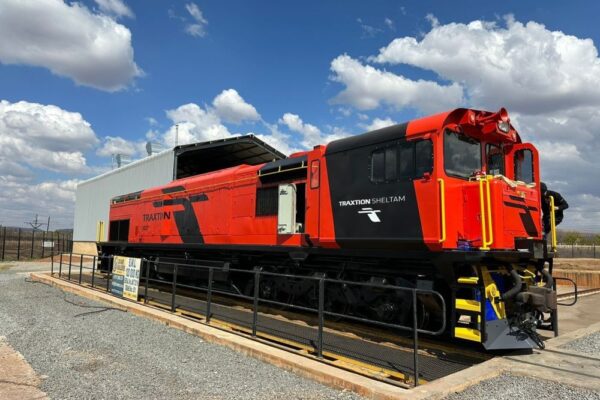
Rail-focused logistics operator Traxtion has secured an $86 million equity investment in a major capital raise that brings together leading institutional investors, signaling renewed confidence in Southern Africa’s rail freight sector and its long-term growth prospects.
The funding round was backed by STANLIB Infrastructure Investments, Standard Bank, and existing shareholder Harith, through its Harith InfraCo and PAIDF2 funds.
The transaction was facilitated by Pallidus Capital and completes the equity portion of Traxtion’s previously announced R3.4 billion rolling stock investment programme.
Strategic boost for rail freight expansion
The capital injection marks a significant milestone in Traxtion’s long-term expansion strategy and positions the company to scale operations as rail reform and private-sector participation gain momentum across South Africa and the wider region.
According to Traxtion, the investment strengthens its ability to secure future funding while accelerating fleet modernisation and operational capacity in response to rising freight demand.
“This additional investment clearly demonstrates the confidence we have long held in the future of rail and is yet another step toward unlocking rail’s full potential as a catalyst for growth,” said James Holley, CEO of Traxtion.
“We previously said Traxtion was preparing to unlock significantly more investment into the sector, the backing of South Africa’s largest financial institutions sets us up perfectly to deliver that.”
Rolling stock programme to expand freight capacity
The funding completes equity requirements for Traxtion’s R3.4 billion rolling stock programme, which includes the procurement and deployment of:
- 46 locomotives
- 920 freight wagons
- Additional capital allocation for future asset investments
- Expanded capacity to support growing freight volumes
The programme remains on schedule, with the first locomotives expected to enter service in March 2027, marking a key step in strengthening operational capacity across key freight corridors.
Local content and job creation focus
Beyond fleet expansion, Traxtion’s investment strategy is designed to generate broader economic impact through localisation and employment creation.
The company has committed to:
- A minimum of 60% local content in procurement and manufacturing
- Ongoing investment in maintenance and refurbishment capabilities
- Supplier development initiatives to strengthen the local rail ecosystem
- An estimated 662 direct jobs during the build and deployment phase
These commitments align with broader industrial policy goals aimed at deepening domestic manufacturing and strengthening rail-linked value chains.
Positioning for growth in a liberalising rail market
Traxtion’s business model is centred on extending the lifecycle of rail assets through refurbishment, maintenance, and operational optimisation.
The company positions itself as a cost-efficient freight solutions provider helping customers shift cargo from road to rail, easing pressure on increasingly congested road infrastructure.
The newly secured capital will support:
- Fleet expansion and modernisation initiatives
- Increased operational footprint
- Continued refurbishment programmes
- Strategic regional growth opportunities
- Future fundraising and investment phases
Institutional confidence and sector reform momentum
The participation of major financial institutions underscores growing investor confidence in rail as a critical enabler of logistics efficiency and economic competitiveness in South Africa.
The timing of the investment aligns with ongoing rail sector reforms, including anticipated regulatory updates under Version 4 of the Network Statement, which is expected to further open the network to private operators and enhance access frameworks.
As South Africa continues to grapple with freight bottlenecks and infrastructure constraints, renewed capital inflows into rolling stock and rail operations are increasingly seen as central to improving supply chain efficiency, lowering logistics costs, and supporting regional trade competitiveness.
Also Read
AIRN vs the Road: Can Rail Finally Steal Africa’s Freight Market?
Top Rail Infrastructure Projects Transforming Africa in 2026

- Beyond the Truck: How UD Trucks Is Redefining Fleet Performance in Southern Africa - October 12, 2026
- Maersk and Viaservice Target Working Capital Challenge in Kenya’s Container Logistics Sector - August 20, 2026
- South Africa’s Special Economic Zones: 2026 Guide to SEZs, Ports, Logistics and Investment - August 16, 2026

