
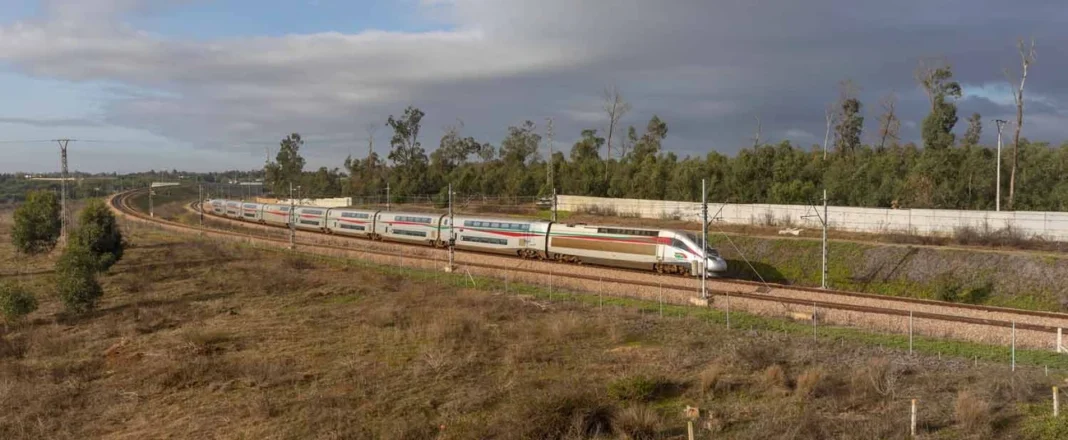
Mozambique’s rail and ports authority is preparing to enter a major new phase of infrastructure expansion along one of its most critical trade arteries, with a US$160 million investment earmarked for the next stage of double-tracking on the Ressano Garcia railway line connecting Maputo to South Africa.
The state-owned operator confirmed that the second phase of works is scheduled to begin in July, marking a continued push to transform the corridor into a high-capacity freight backbone for regional trade.
The contractor responsible for the upgrade is expected to be appointed within the same period, unlocking the next wave of construction activity along the strategic route.
The Ressano Garcia line is widely regarded as one of Mozambique’s most important logistics corridors, forming a direct rail link into South Africa and serving as a key outlet for imports, exports, and transit cargo moving through the Port of Maputo.
Authorities describe it as a “critical artery” for national logistics competitiveness.
Capacity gains already visible
The first phase of the double-tracking programme has already delivered measurable results. Rail capacity on the Maputo-bound line has reportedly risen from about 13 million tonnes to 24 million tonnes annually, highlighting the impact of infrastructure duplication in easing congestion and improving freight efficiency.
Despite these gains, operators warn that infrastructure resilience remains a growing concern, particularly as extreme weather events continue to disrupt operations.
Climate shocks expose vulnerabilities
Recent flooding in southern Mozambique significantly affected rail operations, with the Limpopo line—another key national corridor—suspended for roughly three months. The disruption resulted in estimated losses of around US$12 million and impacted the movement of approximately 130 freight trains.
These interruptions underline a widening challenge for the sector: while capacity expansion is progressing, climate resilience is becoming just as critical as throughput.
Rail authorities have stressed that future logistics performance will depend not only on expanding networks, but also on strengthening them against increasingly frequent weather-related shocks.
Freight and passenger traffic on the rebound
Despite operational setbacks, Mozambique’s rail network has shown signs of recovery. Passenger numbers nearly doubled in the first quarter of the year, reaching about 151,400 travellers, supported by stabilisation following earlier political unrest and gradual post-flood recovery.
Freight activity has also strengthened. Around 3.6 million tonnes of general cargo were transported during the same period, reflecting nearly 15% year-on-year growth and a significant step toward annual transport targets.
However, the financial impact of infrastructure damage and service disruption remains severe. Rail operator losses reportedly reached US$47 million in the first quarter, largely attributed to untransported cargo and flood-related infrastructure damage.
Long-term expansion pipeline
Mozambique’s government continues to position rail as a central pillar of its long-term logistics strategy. A broader investment programme—valued at approximately €193 million equivalent—has been outlined through 2030, targeting network expansion, rolling stock procurement, and capacity upgrades.
Key priorities include completing the remaining 25 kilometres of double tracking on the Ressano Garcia corridor, acquiring new passenger coaches, and expanding freight capacity through the purchase of hundreds of wagons and additional mainline locomotives.
The strategy reflects a broader ambition: to scale up rail efficiency, reduce pressure on road transport, and strengthen Mozambique’s role as a transit gateway for Southern Africa’s trade flows.
Outlook: building a more resilient trade corridor
As Mozambique moves into the next phase of rail expansion, the focus is shifting from pure capacity growth to a dual objective—efficiency and resilience.
With rising freight demand and increasing climate volatility, the success of the Maputo Corridor will depend on how effectively infrastructure investment translates into reliable, year-round logistics performance.
For regional trade, the stakes are significant: a stronger Ressano Garcia line means faster, more predictable movement of goods between Mozambique and South Africa—two of the region’s most important economic partners.
Also Read
Why the Trump Administration Is Backing Africa’s $4 Billion Lobito Rail Corridor
South Africa Unveils Bold Logistics and Rail Investment Plan to Revive Economy

- Inside Isuzu’s Plan to Make South Africa the Truck Manufacturing Hub for Africa - October 12, 2026
- UPF Group Expands African Logistics Network with New Rwanda Office - September 18, 2026
- DP World’s Africa Network Is Growing While Jebel Ali Takes a Heavy Hit - August 15, 2026

