

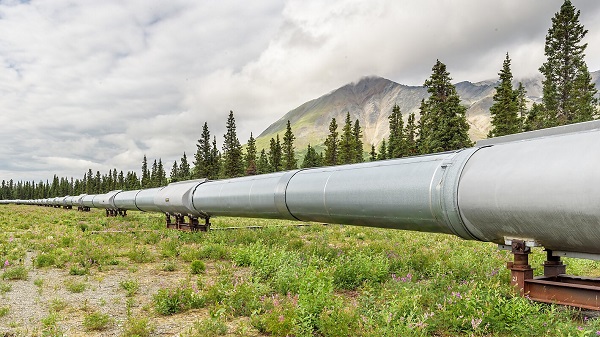
In a significant shift in Europe’s energy landscape, Ukraine has officially halted the transit of Russian natural gas to European markets as of January 1, 2025.
This bold move comes as a result of the expiration of a prewar transit agreement with Gazprom, the Russian state-owned energy giant. The decision has far-reaching implications for several European countries that have long relied on Ukrainian pipelines to secure their energy supplies.
Ukraine’s Energy Minister, Herman Halushchenko, confirmed the halt in gas transit, citing national security concerns as the primary reason for the move.
The cessation of gas flow signals the end of one of the last remaining energy links between Russia and Europe, a region that has seen its energy dependencies shift dramatically since the onset of the conflict in Ukraine in 2022.
The End of a Pipeline Era
For decades, Ukraine’s extensive pipeline network played a crucial role in transporting Russian gas to European customers.
The Ukrainian route has been one of the main conduits for Russian gas exports to Europe, serving countries such as Germany, Italy, Austria, Slovakia, and Hungary. However, since Russia’s invasion of Ukraine, European nations have increasingly sought to reduce their dependence on Russian energy sources.
With the expiration of the contract that had allowed Russia to continue shipping gas through Ukraine, the country made the decisive choice to not renew the deal, citing concerns over the security of its energy infrastructure and the broader geopolitical context.
“National security comes first,” Halushchenko said. “Given the current security environment, we cannot allow Russia to continue using our pipelines to supply gas to Europe.”
Impact on European Energy Markets
The immediate impact of this decision will be felt by several European countries that have historically relied on Russian gas delivered via Ukraine.
For nations such as Austria, Slovakia, and Hungary, which have been among the last European buyers of Russian gas, this marks a new chapter in their energy procurement strategies.
However, Europe has been preparing for this eventuality. In recent years, the European Union has invested heavily in alternative energy sources, including liquefied natural gas (LNG), renewable energy, and new pipeline infrastructure that bypasses Ukraine.
For example, Hungary, which had received Russian gas via Ukraine, will continue to be supplied via the TurkStream pipeline, which runs directly from Russia to Turkey and then branches off to Southern Europe. Similarly, other EU nations have diversified their energy imports, reducing the overall reliance on Russian natural gas.
A Divided Future for Gas Supply
Despite the shift, the European energy market remains divided on how to handle the fallout from this disruption. Some countries, particularly those in Eastern Europe, may face short-term energy supply challenges as they transition away from Russian gas.
Meanwhile, others in Western Europe are expected to maintain stability, thanks to the EU’s collective efforts to diversify energy sources.
In the coming months, the EU will likely seek to strengthen its energy partnerships with other gas producers, including the United States, Qatar, and Algeria. At the same time, renewable energy projects, including solar and wind, will become increasingly vital in filling the gap left by Russian gas.
A New Energy Paradigm
Ukraine’s decision to cut off Russian gas transit marks the beginning of a new energy paradigm for Europe, one in which reliance on Russian fossil fuels is rapidly fading.
While this will have immediate ramifications for energy security, it also presents an opportunity for Europe to accelerate its transition to cleaner, more sustainable energy sources.
The European Union has long been a proponent of green energy initiatives, and with the halt in Russian gas flows, there is now a heightened sense of urgency to invest in energy independence.
This event further underscores the importance of building a resilient and diversified energy market for the continent.
As the situation evolves, Europe will be watching closely to see how Ukraine’s decision affects gas prices, supply chains, and the broader geopolitical dynamics in the region.
For now, the message is clear: Europe is moving toward a future where Russian energy no longer holds sway, and new partnerships and innovations will drive the continent’s energy security.
Also Read
Ontario’s New Tax Changes: What You Need to Know for 2025
Trader Joe’s Announces Exciting Expansion Plans for 2025

- What Is a Pick and Pack Warehouse? A Complete Guide for Online Retailers - February 18, 2026
- Rhenus Powers South Africa’s First ScreenX Cinema with Complex Global Logistics Operation - February 18, 2026
- Yusen Logistics Expands into East Africa with Strategic Kenyan Joint Venture - February 17, 2026

