

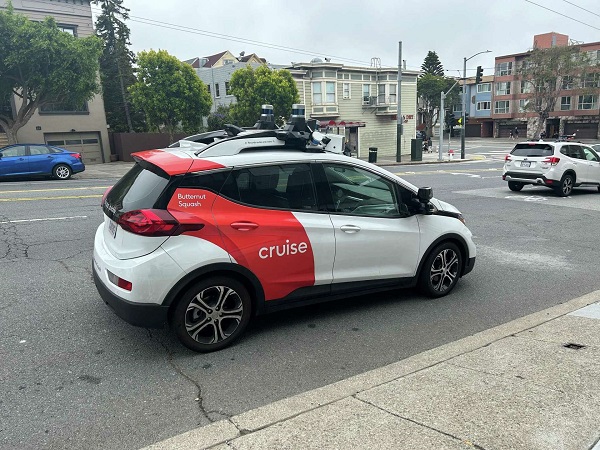
In a significant shift, General Motors (GM) has announced its decision to cease funding its self-driving car unit, Cruise.
This marks a retreat from the automaker’s ambitious foray into autonomous vehicle technology, particularly its robotaxi services.
The move comes amid growing scrutiny over the safety of self-driving cars and mounting regulatory challenges.
Recently, the California Department of Motor Vehicles (DMV) suspended Cruise’s operating permits, citing safety concerns following several high-profile incidents involving the company’s autonomous vehicles.
Mary Barra, GM’s CEO, confirmed the decision during an earnings call, highlighting the company’s revised strategy.
“We remain committed to a future of autonomous driving but will focus on a phased approach,” she said. GM plans to redirect resources toward electric vehicles (EVs) and other advanced technologies that promise near-term returns.
The Fallout for Cruise
Launched in 2013 and acquired by GM in 2016 for over $1 billion, Cruise was positioned as a trailblazer in autonomous driving.
The company had begun operating a fleet of robotaxis in select U.S. cities, including San Francisco, where it faced mixed reviews from both regulators and the public.
While Cruise demonstrated the potential of self-driving technology, it struggled to address real-world challenges, such as navigating dense urban environments and ensuring passenger safety.
The recent permit suspension by California regulators, coupled with growing public unease, has significantly hindered Cruise’s ability to scale its operations.
Financial Implications
GM’s decision to withdraw funding comes as the company seeks to manage costs amid broader economic uncertainties.
Cruise represented a significant financial commitment, with GM investing billions over the years. However, the division has yet to achieve profitability, and GM appears unwilling to continue absorbing these losses without clearer pathways to commercialization.
Industry Impact
GM’s retreat could signal a broader shift in the autonomous vehicle sector. Other players, including Ford and Volkswagen, have also scaled back their self-driving ambitions in recent years, citing technological and regulatory hurdles.
The industry, once seen as a race to deploy robotaxis, may now be shifting toward a more cautious and incremental approach.
The Road Ahead
While GM’s focus on electric vehicles remains steadfast, its decision to scale back Cruise underscores the complexities of bringing fully autonomous vehicles to market.
For now, the dream of widespread robotaxi adoption may take a backseat as automakers reassess their priorities and strategies in an evolving mobility landscape.
Also Read
Inside XPO Logistics: A Deep dive into a global logistics leader
Inside XPO Logistics: A Deep dive into a global logistics leader

- What Is a Pick and Pack Warehouse? A Complete Guide for Online Retailers - February 18, 2026
- Rhenus Powers South Africa’s First ScreenX Cinema with Complex Global Logistics Operation - February 18, 2026
- Yusen Logistics Expands into East Africa with Strategic Kenyan Joint Venture - February 17, 2026

 and other advanced technologies that promise near-term returns.)