Africa’s mineral wealth continues to attract global interest, but moving resources from remote deposits to international buyers remains a significant operational challenge.
For mining companies, particularly emerging producers operating in regions with limited infrastructure, the distance between a viable deposit and a commercially successful export operation can be measured not only in kilometres, but also in logistics costs, infrastructure constraints and execution risks.
Adhira Shipping & Logistics Fzco (ASL) is positioning maritime logistics as a central part of that equation.
Founded in 2022 and based in Dubai, the company specialises in vessel chartering, contracts of affreightment, transshipment and the coordination of shipping capacity for bulk commodities.
Its approach centres on matching the vessel, cargo, port and commercial arrangement to the realities of each project.
Rather than treating ocean freight as an isolated service, ASL works towards connecting the mine, export point and final buyer into a coordinated logistics chain.
For African mineral producers seeking access to markets in Asia, this approach can help address a fundamental question: how can commercially viable exports begin when the infrastructure required to support conventional shipping is not yet in place?
Infrastructure gaps demand practical alternatives
Across Africa’s mining regions, the availability of mineral deposits does not automatically translate into export capacity.
Roads, railways, jetties and port facilities must work together to move material reliably.
Where a loading point cannot accommodate large ocean-going vessels, producers may face the prospect of expensive infrastructure development before they can ship at commercially meaningful volumes.

For smaller and developing mining operations, constructing a deep-water terminal may require substantial capital and lengthy development timelines.
Waiting for permanent infrastructure can delay revenue generation, while the absence of a practical export route can complicate project financing and commercial negotiations.
ASL addresses this challenge through vessel chartering and transshipment arrangements designed around the physical limitations of individual loading locations.
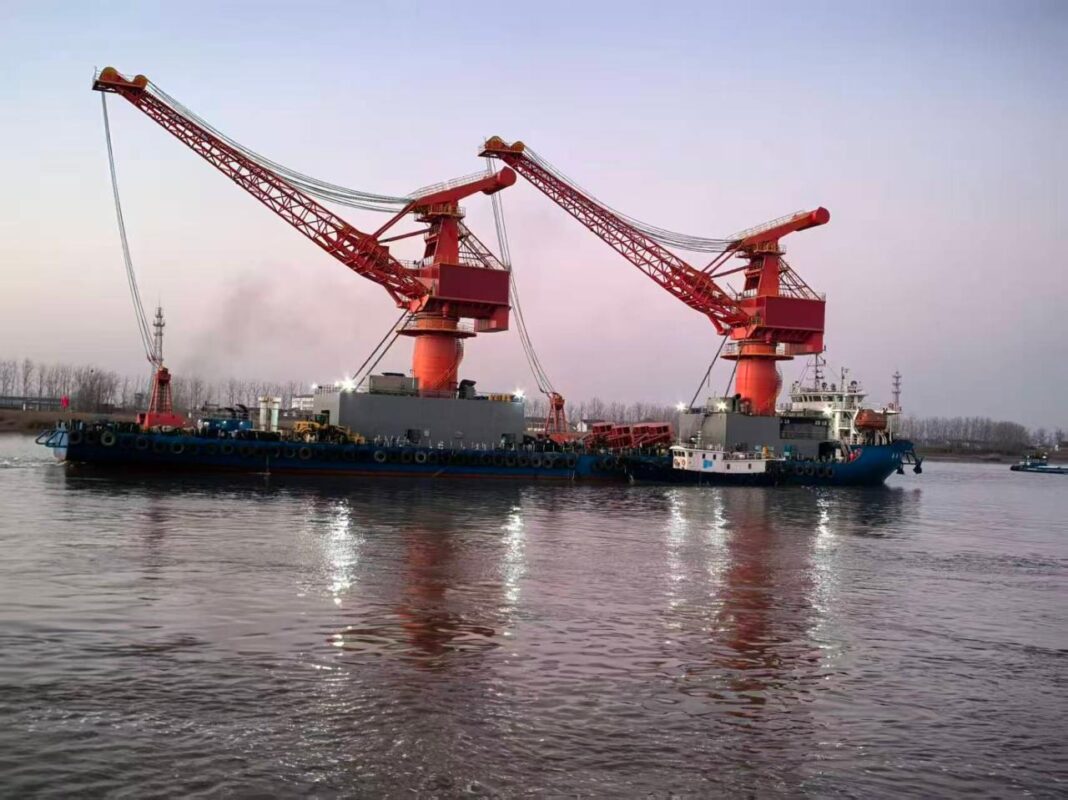
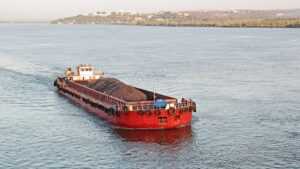
Depending on the cargo and port conditions, smaller vessels, tugs and barges can transport material from shallow-water loading points to an offshore transfer location, where a floating crane or other suitable equipment transfers the cargo to a larger ocean-going vessel.
The objective is to establish a workable route to international markets without making a fully developed deep-water terminal a prerequisite for every shipment.
This model is particularly relevant to mineral projects in West Africa, where ASL identifies Guinea, Sierra Leone and Liberia as key areas of focus.
The company is also expanding its work across markets including South Africa, Namibia, Madagascar and Tanzania.
Guinea bauxite illustrates the model
A representative example from Guinea demonstrates how a carefully structured transshipment operation can overcome a physical barrier to mineral exports.
In the project, a bauxite producer needed to transport large cargo parcels to Asian buyers, but its loading point could accommodate only shallow-draft craft.
Direct loading of a large ocean-going vessel was therefore not a practical option under the existing conditions.
ASL designed a logistics chain involving tugs, barges, a floating crane and an ocean vessel.
Smaller craft moved the cargo from the loading point to an offshore location, where it could be transferred to the larger vessel for the onward voyage. The operation was supported by round-the-clock oversight.

Chief Operating Officer
The arrangement brought together several moving parts that had to function as a coordinated system.
Barges needed to operate in line with the loading programme, the floating crane had to support the transfer process, and the ocean vessel’s schedule had to align with cargo readiness and the time allowed for loading.
Such operations require more than securing available shipping capacity. They demand an understanding of draft restrictions, loading rates, vessel suitability, weather windows and contractual obligations.
A delay at one stage can affect the wider operation, potentially increasing costs through waiting time or demurrage.
The Guinea example highlights how transshipment can provide a route to market where port infrastructure imposes limitations.
It also illustrates why the design of the logistics chain needs to reflect the practical conditions at the mine and loading point rather than relying on a standard shipping solution.
Chartering offers flexibility as volumes evolve
A second element of ASL’s approach is its asset-light operating model. Instead of relying exclusively on an owned fleet, the company charters vessels according to the requirements of each cargo and voyage.
This gives clients access to different categories of shipping capacity without necessarily committing capital to vessel ownership.
It also provides flexibility when production volumes, destinations or operating conditions change.
ASL’s vessel options range from coasters and barges to Handy, Supramax and Panamax bulk carriers, alongside tugs, floating cranes and other vessel types suited to particular operations.
The selection depends on the characteristics of the cargo, the loading and discharge ports, and the commercial terms governing the shipment.
For bulk minerals, these considerations can be decisive. Cargo density, moisture content, dust characteristics and liquefaction risks influence handling and carriage requirements.
Port draft, berth availability, tides and loading equipment determine which vessels can be used and how efficiently they can operate.
The commercial structure matters too. Parcel size, loading and discharge rates, laytime provisions and the choice between free-on-board (FOB) and cost, insurance and freight (CIF) arrangements all influence the allocation of responsibilities and costs.
ASL manages chartering arrangements, including time-charter and bareboat structures, as well as contracts of affreightment (COAs).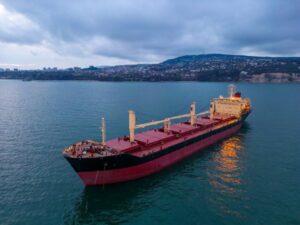
Its stated objective is to secure appropriate tonnage on suitable terms while adapting capacity to clients’ requirements.
For producers whose output may increase as a mine develops, this flexibility can help avoid building a logistics model around volumes that may no longer reflect future production.
Managing the risks beyond the voyage
The effectiveness of a shipping arrangement depends on what happens before a vessel arrives and after it departs.
Cargo readiness, inland transport, stockpile management, port equipment and the timing of vessel arrivals all affect the performance of the wider export operation.
ASL identifies infrastructure constraints, weather, freight-market volatility and demurrage exposure among the risks facing African bulk logistics.
Its response includes realistic operational planning, long-term commitments with vessel owners, a round-the-clock operations desk and collaboration with industry partners.
The company’s leadership also brings maritime operating experience to vessel selection and execution.
Founder and Chief Executive Officer Capt. Pappu Sastry is a master mariner who has co-founded and led ship-owning businesses across several international markets.
Chief Operating Officer Capt. Vijay Nicodemus brings more than 30 years of shipping and logistics experience, including senior roles at Karaikal and Gangavaram ports.
That operational perspective is important when evaluating whether a vessel is genuinely suitable for a particular African port.
A vessel that appears commercially attractive in the freight market may prove unsuitable if its draft exceeds port limitations or its operating requirements cannot be met by local facilities.
ASL reports that it received the IBJ Bulk Logistics Excellence Award in both 2023 and 2024. These recognitions form part of the company’s stated track record as it seeks to strengthen its position in mining-related shipping.
Connecting shipping with the wider mine-to-market chain
ASL operates alongside Rainmakers Management & Consultancy Fzco (RMAC) and Global Strategic Commodities (GSC), independent associate companies whose roles complement one another across the wider resource-project lifecycle.
Within this association, GSC focuses on strategic advisory services, mergers and acquisitions, project opportunities and capital raising.
RMAC coordinates project execution and land-side logistics, including transport, warehousing and port interfaces. ASL provides the maritime shipping component, including chartering, vessel operations and transshipment.
Each company has its own shareholding, scope and contractual arrangements.
Capt. Pappu Sastry is Chief Executive of all three, which makes it easier to align goals when a project calls for commercial planning, project management and shipping to work together.
This matters because export performance is rarely determined by the sea voyage alone.
A mine may produce the required volume, but an unreliable trucking schedule or poorly coordinated port stockpile can leave cargo unavailable when the vessel arrives.
Conversely, securing a vessel without a realistic understanding of port capacity can expose the shipper to avoidable delays and costs.
Integrating these considerations earlier in project planning can help developers assess the feasibility of an export route before committing to a particular logistics structure.
ASL advises mining companies to consider route-to-port requirements, port suitability, transshipment needs and the appropriate FOB or CIF terms during the feasibility stage.
For projects where permanent infrastructure is still under development, floating cranes, barges and suitable chartered vessels may provide an alternative route to exports, subject to technical, commercial, regulatory and environmental requirements.
Preparing for Africa’s evolving mineral trade
Demand for bauxite, iron ore and critical minerals is creating opportunities for African producers to connect deposits with international industrial supply chains.
At the same time, infrastructure gaps, operational complexity and changing shipping requirements continue to shape the economics of mineral exports.
ASL’s stated priorities include expanding long-term shipping relationships for bauxite, manganese and iron ore, strengthening partnerships across its operating markets, chartering modern tonnage and developing its position in critical-minerals logistics.
Decarbonisation requirements are also expected to influence decisions across the shipping sector.
For mining developers, the broader lesson is that logistics should not be treated as a final step after the resource has been developed.
The export route, vessel requirements, port constraints and commercial shipping terms are integral to determining whether a project can deliver material to buyers reliably and at a sustainable cost.
By combining flexible vessel chartering with transshipment solutions and working alongside associate companies across the mine-to-market chain, Adhira Shipping & Logistics is seeking to address one of the practical barriers facing African mineral producers: turning resources in the ground into cargo that can reach global markets.
Also Read
- South Africa’s Inflation Rises to 5.2%: What It Means for Transport, Logistics and Supply Chains
- Air freight costs climb as capacity constraints reshape global trade routes
- East Africa Eyes New Rail Freight Corridor Linking Tanzania, Uganda and Eastern DRC

- Beyond the Mine Gate: How Adhira Shipping & Logistics Is Tackling Africa’s Mineral Export Challenge - November 20, 2026
- East Africa Eyes New Rail Freight Corridor Linking Tanzania, Uganda and Eastern DRC - November 19, 2026
- South Africa’s R1.156 Trillion Logistics Bill: The Growing Cost of Moving Freight - November 18, 2026