
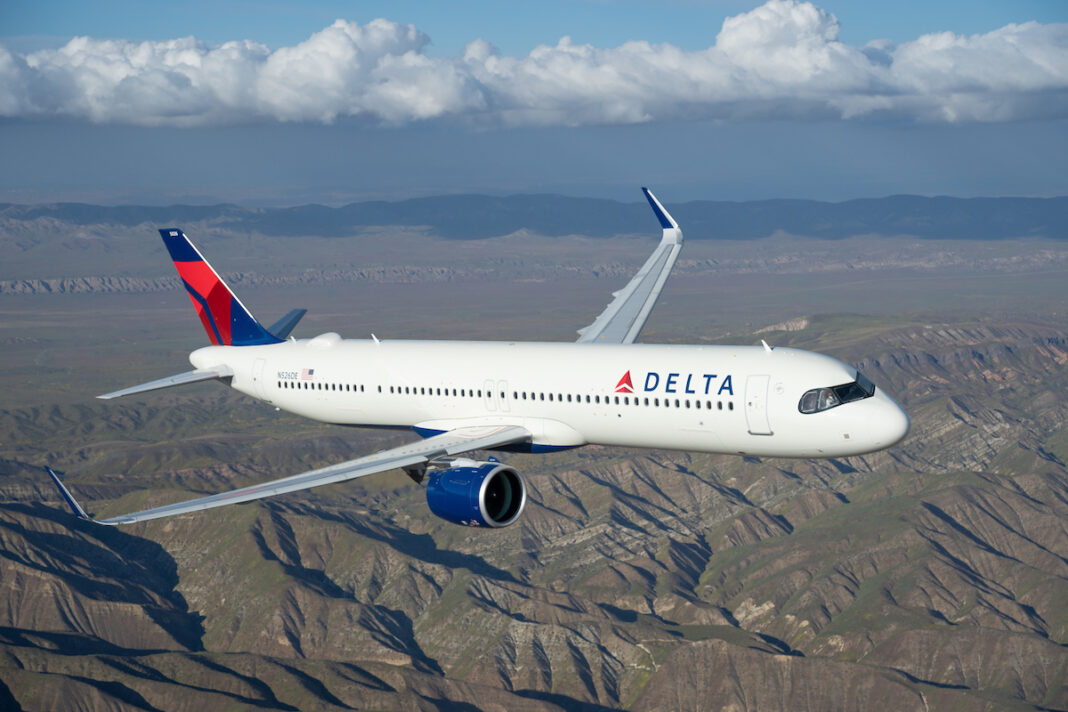
If you’re planning a quick hop on Delta Air Lines this month, you might want to grab a coffee before you board.
The airline has confirmed it is pulling food and beverage service from its shorter routes, effective May 19 — and most economy passengers won’t see a drop of water or a single snack on those flights.
What’s Changing — And When
Delta announced that passengers on flights under 350 miles will no longer receive any food or beverage service, unless they are seated in first class, which will continue to receive full service as always.
The policy kicks in May 19, giving travellers barely two weeks’ notice.
To put the distance threshold in real terms: a flight from New York to Boston is well under 300 miles, meaning that route goes dry.
However, passengers flying between Los Angeles and San Francisco — a slightly longer corridor — would still receive refreshments.
Overall, approximately 9% of Delta’s daily flights will no longer offer any food or drink service under the new policy.
There’s a Silver Lining — For Some
Delta is framing this as a broader service restructuring, not simply a cost-cutting retreat. The airline says Delta Comfort and Delta Main cabin passengers travelling 350 miles or more will gain full food and beverage service — a move that will benefit roughly 14% of the airline’s daily flights.
In other words, Delta is trading snacks on short hops for expanded service on mid-range routes.
The airline’s statement to CBS News positioned the move as an effort toward creating “a more consistent experience” across its network.
The carrier also reassured passengers that even on flights without beverage service, crew members will remain visible and available, focused on customer care as they are on every flight.
How Delta Compares to Rivals
Delta is not breaking new ground here. American Airlines and Southwest both offer food and beverage service only on flights of 250 miles or more, while United draws its line at 300 miles.
Delta’s 350-mile threshold actually makes it the most generous of the major US carriers — at least on paper.
The Bigger Picture: Airlines Under Pressure
This policy shift doesn’t happen in a vacuum. Airlines are raising fares and cutting routes in response to rising jet fuel costs tied to the Iran conflict, with fuel representing as much as 30% of overall operating costs for carriers.
Every operational saving counts, and in-flight catering is one of the more visible line items airlines can trim without grounding aircraft.
Industry analysts also point to the collapse of Spirit Airlines as a factor that could push fares higher broadly, since the budget carrier had historically helped keep ticket prices in check across the market.
For passengers, the picture is straightforward: the era of complimentary pretzels and ginger ale on quick regional jumps is fading fast. Pack your own.
Delta’s new food and beverage policy takes effect May 19, 2026.
Also Read
Global Air Travel Demand Rises 2.1% in March, Masking Stark Regional Disparities
Global entry application online: A step-by-step guide for international travelers

- DP World’s Africa Network Is Growing While Jebel Ali Takes a Heavy Hit - August 15, 2026
- U.S. Truck Freight Prices Fall 1.8% in July as Diesel Costs Slide - August 13, 2026
- Top 10 Largest Container Ships in the World in 2026 - August 11, 2026

