

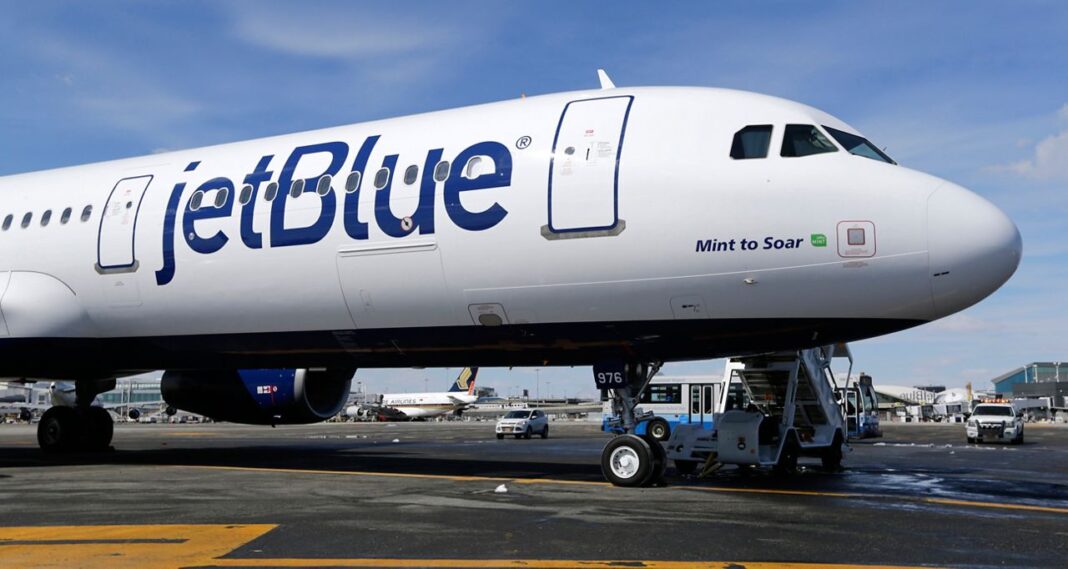
The airline industry has seen significant consolidation over the past few years, and recent discussions have centered around the possibility of a merger between JetBlue Airways and Alaska Airlines.
While there is no official confirmation of such plans, the speculation is fueled by strategic considerations, industry trends, and recent developments in both airlines’ operations.
Historical Context and Industry Trends
The airline sector has undergone several transformative mergers in the last two decades. The consolidations of Delta and Northwest, United and Continental, and American and US Airways reshaped the competitive landscape in the United States.
More recently, Alaska Airlines completed its acquisition of Virgin America in 2016 and Hawaiian Airlines in 2024, further cementing its position as a key player on the West Coast and in the Pacific market.
JetBlue, meanwhile, has focused on expanding its footprint on the East Coast and in transatlantic markets. The airline’s ongoing attempt to acquire Spirit Airlines, despite facing antitrust scrutiny, underscores its ambitions to grow its low-cost market share and compete more effectively against legacy carriers.
Why a JetBlue-Alaska Merger Makes Strategic Sense
A merger between JetBlue and Alaska Airlines could create a formidable challenger to the “Big Three” U.S. carriers—Delta, United, and American Airlines. Here’s why:
- Complementary Networks:
- JetBlue’s strength lies in the East Coast and Caribbean markets, while Alaska dominates the West Coast and Pacific regions. A merger could provide seamless coast-to-coast coverage and open new opportunities for cross-country and international travel.
- Fleet Synergies:
- Both airlines operate fleets dominated by Airbus and Boeing aircraft, making integration relatively straightforward compared to mergers involving disparate fleets.
- Loyalty Program Enhancement:
- Combining Alaska’s Mileage Plan and JetBlue’s TrueBlue loyalty programs could create a more competitive offering for frequent fliers, appealing to business and leisure travelers alike.
- Cost Efficiencies:
- Operational synergies, such as shared maintenance facilities, unified IT systems, and reduced overhead, could result in significant cost savings.
Challenges to Overcome
While the potential benefits are substantial, a merger would face several hurdles:
- Regulatory Scrutiny:
- The U.S. Department of Justice (DOJ) has increased its oversight of airline mergers, particularly following the JetBlue-Spirit deal. A JetBlue-Alaska merger would undoubtedly face intense antitrust scrutiny.
- Cultural Differences:
- Alaska Airlines is known for its focus on customer service and regional connectivity, while JetBlue has built its reputation on low-cost innovation and a distinct brand identity. Integrating these corporate cultures would be a complex task.
- Market Overlap:
- Although their networks are largely complementary, there is some overlap in markets like California and transcontinental routes. Regulators might require concessions, such as divesting certain slots or routes, to approve the merger.
Recent Developments and Their Implications
The recent $1.9 billion acquisition of Hawaiian Airlines by Alaska Airlines has raised questions about whether Alaska is positioning itself for a broader strategic move.
By consolidating its presence in the Pacific, Alaska has strengthened its bargaining power and market appeal, making it a more attractive merger partner.
JetBlue’s board has also reportedly considered Alaska as a potential merger target, according to disclosures during the JetBlue-Spirit antitrust trial.
While CEO Robin Hayes has publicly downplayed the likelihood of pursuing another merger soon, analysts speculate that JetBlue might revisit the idea once its Spirit acquisition is finalized.
The Competitive Landscape
If a JetBlue-Alaska merger were to occur, the combined airline would pose a significant challenge to Southwest Airlines, which currently dominates the low-cost market.
Additionally, it could create a viable fourth competitor to the Big Three, offering travelers more options and potentially driving down fares in key markets.
Conclusion
Although a merger between JetBlue and Alaska Airlines remains speculative, the strategic rationale is compelling. Both airlines are at pivotal moments in their growth trajectories, and a partnership could unlock significant value for shareholders and customers alike.
However, the road to such a merger would be fraught with regulatory, operational, and cultural challenges.
As the airline industry continues to evolve, the possibility of a JetBlue-Alaska merger is worth monitoring closely.
Whether or not it materializes, the speculation highlights the dynamic nature of the sector and the ongoing quest for competitive advantage in a crowded market.
Also Read
Larry Ellison’s Wealth Surge: A Tech Mogul’s Triumph Amid Oracle’s Revival
IRS Stimulus Checks 2024: Tracking payment, eligibility, payment details and more

- What Is a Pick and Pack Warehouse? A Complete Guide for Online Retailers - February 18, 2026
- Rhenus Powers South Africa’s First ScreenX Cinema with Complex Global Logistics Operation - February 18, 2026
- Yusen Logistics Expands into East Africa with Strategic Kenyan Joint Venture - February 17, 2026

