

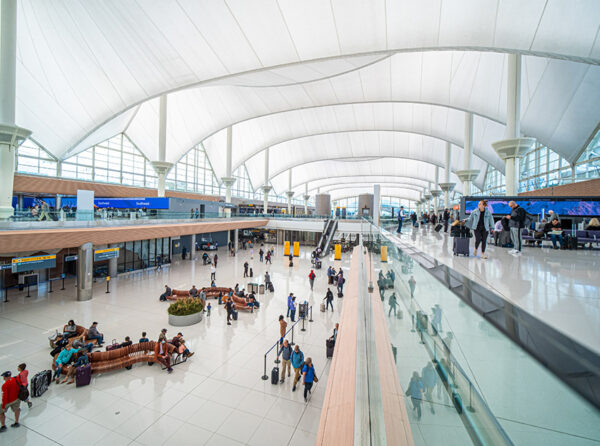
Denver International Airport (DIA) has long been a symbol of ambition and growth, boasting its iconic tented terminal and serving as a critical gateway for millions of travelers.
Yet, recent years have seen DIA grappling with mounting challenges, from construction fatigue to operational inefficiencies. As passenger numbers soar and expansion projects continue, the airport faces a pivotal moment in its history.
How did one of the busiest airports in the world find itself ranked poorly for flight disruptions, and what does this mean for its future?
The Growing Pains of Expansion
DIA’s struggles are rooted in its rapid growth. In 2023, the airport welcomed nearly 78 million passengers—a record-breaking year that marked a 12% increase over 2022.
Despite this achievement, DIA slipped globally from the third to the sixth position among the world’s busiest airports.
This decline reflects not just increased competition but also growing operational challenges.
The ambitious Great Hall Project has been a focal point of these challenges. Designed to modernize the airport and improve passenger flow, it has instead caused significant disruptions. Long security lines, construction zones, and logistical bottlenecks have tested travelers’ patience.
While DIA’s leadership promises relief with new security checkpoints and state-of-the-art technology, these improvements have yet to fully materialize.
Construction Fatigue: A Persistent Issue
For many travelers, DIA has become synonymous with construction fatigue. The airport’s ongoing renovations have created a sense of perpetual incompletion.
From revamped concourses to expanded gates, these projects aim to prepare DIA for 100 million annual passengers by 2027 and 120 million by 2045. Yet, the constant construction has left passengers frustrated, with delays and cancellations becoming all too common.
CEO Phil Washington acknowledges these challenges, emphasizing the need for patience as DIA transitions into a more efficient hub. He has promised that visible construction impacts will wind down soon, offering travelers a glimpse of what the completed Great Hall will look like—a Colorado-centric design with enhanced amenities.
Operational Struggles and Passenger Experience
Beyond construction woes, DIA has faced criticism for its operational inefficiencies. According to AirHelp’s rankings, nearly 29% of flights at DIA were delayed or canceled in 2024—a statistic that places it among the worst airports in the United States for disruptions.
These delays not only inconvenience passengers but also have broader economic and environmental consequences.
Despite these setbacks, DIA excels in certain areas. Its food and retail offerings reflect Colorado’s unique culture, providing travelers with memorable experiences even amidst logistical hurdles. Additionally, recent expansions like Concourse A-East have added capacity to manage increasing passenger volumes.
Looking Ahead: Challenges and Opportunities
As DIA continues its ambitious expansion plans, several key priorities emerge:
-
Infrastructure Modernization: Completing projects like the Great Hall and improving Peña Boulevard traffic flow will be critical to alleviating congestion.
-
Operational Efficiency: Leveraging technology to optimize security processes and reduce delays must remain a top focus.
-
Sustainability: Addressing environmental concerns related to expanded traffic and construction is essential for long-term viability.
-
Customer-Centric Approach: Enhancing passenger experience through clear communication during disruptions can rebuild trust.
Denver International Airport stands at a crossroads between growth and operational excellence.
Its current struggles highlight the complexities of managing one of the world’s busiest airports while undergoing transformative expansion. For travelers, DIA represents both promise and frustration—a hub poised to redefine itself but still grappling with immediate challenges.
As DIA looks toward 2045, it must balance its ambitious vision with practical solutions that prioritize efficiency and customer satisfaction. Whether it can rise above its current rankings depends on its ability to adapt swiftly while maintaining its role as an essential gateway for Colorado and beyond.
Also Read

- What Is a Pick and Pack Warehouse? A Complete Guide for Online Retailers - February 18, 2026
- Rhenus Powers South Africa’s First ScreenX Cinema with Complex Global Logistics Operation - February 18, 2026
- Yusen Logistics Expands into East Africa with Strategic Kenyan Joint Venture - February 17, 2026

 has long been a symbol of ambition and growth, boasting its iconic tented terminal and serving as a critical gateway for millions of travelers.)