

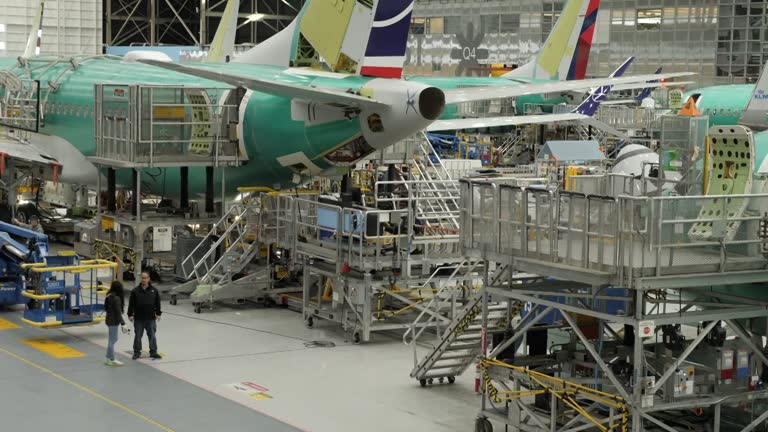
Boeing has officially resumed production of its flagship 737 MAX aircraft, marking a significant milestone in its efforts to meet the surging global demand for fuel-efficient, high-performance aircraft.
This move follows years of careful development and rigorous safety testing, as the company works to restore confidence in the popular jetliner following its temporary grounding in 2019.
The 737 MAX, which is part of Boeing’s highly successful 737 family, has been one of the most in-demand aircraft in recent years.
With airlines looking for more fuel-efficient options to meet sustainability goals and respond to rising passenger numbers, the 737 MAX promises to offer significant operational cost savings while reducing carbon emissions.
Boeing’s decision to ramp up production comes as global air travel continues to recover from the pandemic, and airlines are increasingly seeking newer, more environmentally friendly aircraft to upgrade their fleets.
Boeing’s 737 MAX program, which includes several variants like the MAX 7, MAX 8, MAX 9, and MAX 10, has already attracted significant orders from airlines worldwide.
As part of Boeing’s efforts to boost production capacity, the company is working to increase manufacturing output at its Renton, Washington, facility.
The first units rolling off the production line are slated for delivery to customers in early 2025.
The 737 MAX’s successful return to production marks the culmination of years of improvements and enhancements to both its design and operational safety.
In response to the issues that led to its grounding, Boeing has implemented numerous updates to the aircraft’s flight control systems, alongside comprehensive pilot training programs.
The company has worked closely with aviation regulators, including the Federal Aviation Administration (FAA), to ensure the MAX meets the highest safety standards.
Industry analysts have noted that the 737 MAX’s fuel efficiency improvements, especially when compared to older models, make it a strong competitor in the single-aisle aircraft market.
Airlines are keen to reduce fuel consumption and operating costs, especially with rising fuel prices and growing pressure to cut greenhouse gas emissions.
Boeing’s ramped-up production is seen as a sign of the company’s renewed optimism and commitment to restoring its place at the forefront of the aviation industry.
Despite the challenges Boeing faced in the wake of the MAX’s grounding, it has managed to regain trust with customers and investors alike.
As the company moves forward with the production of the 737 MAX, it is expected to continue playing a key role in the recovery and growth of the global aviation industry, offering airlines a reliable, efficient, and sustainable option for meeting the needs of the future.
Also Read
Google stock soars as tech firm unveils quantum computing chip Willow
China’s crackdown sparks Nvidia stock plunge: What investors need to know

- What Is a Pick and Pack Warehouse? A Complete Guide for Online Retailers - February 18, 2026
- Rhenus Powers South Africa’s First ScreenX Cinema with Complex Global Logistics Operation - February 18, 2026
- Yusen Logistics Expands into East Africa with Strategic Kenyan Joint Venture - February 17, 2026

